
Choosing the Right Cambodia Visa
Getting a visa for Cambodia is generally straightforward. Understanding which visa you need, however, can be a little more complicated.
Much of the confusion comes down to what two commonly used Cambodian visas — the Tourist Visa (T Class) and the Ordinary Visa (E Class) — legally allow you to do.
Despite their similar names, they serve very different purposes. To complicate matters, an Ordinary Visa is anything but ordinary, while the term E Class might lead you to believe it’s exclusively an electronic visa. It isn’t. Depending on your nationality, it may also be available on arrival in Cambodia.
And just to keep things interesting, eligibility for either category of visa on arrival isn’t always straightforward.
Tourist Visa versus Ordinary Visa
Applying for a Cambodia Visa
Check Official Visa Requirements
Cambodia’s basic visa requirements are relatively straightforward. Generally, you’ll need a passport valid for more than six months, sufficient blank passport pages and payment of the relevant visa fee. Depending on your circumstances, supporting documentation or evidence of onward travel may also be necessary.
At AVSE-TESOL, we’ve been welcoming international students and prospective English teachers to Cambodia for many years. One thing we’ve learned is that visa eligibility isn’t always as straightforward as the published requirements might suggest. Enrolling in a TESOL course or planning to teach English in Cambodia doesn’t automatically establish eligibility for a particular visa.
For the latest information, we recommend checking official Cambodian Government resources. Our Phnom Penh team can provide practical guidance, but the decision to approve a visa or allow entry rests with Cambodian immigration authorities.
Official Cambodian Government Resources:
Applying Online or On Arrival
How you apply for a Cambodia visa will largely depend on your personal circumstances and preferences. Some travellers prefer to have everything organised well before departure, and securing a visa online can provide valuable peace of mind. Others may decide to travel at the last minute, making a visa on arrival the more practical option, provided they’re eligible.
If you choose to apply online, we strongly recommend using the official Cambodian Government e-Visa portal. It’s secure, you avoid additional agent fees, and there’s an online chat service if you encounter a problem or need clarification.
Obtaining a visa on arrival generally involves presenting your passport, completing the necessary arrival formalities, providing any supporting documents requested and paying the relevant visa fee. Depending on how busy the airport is, you may also need to spend some time waiting in a queue.
So, what does AVSE-TESOL recommend — applying online or obtaining a visa on arrival?
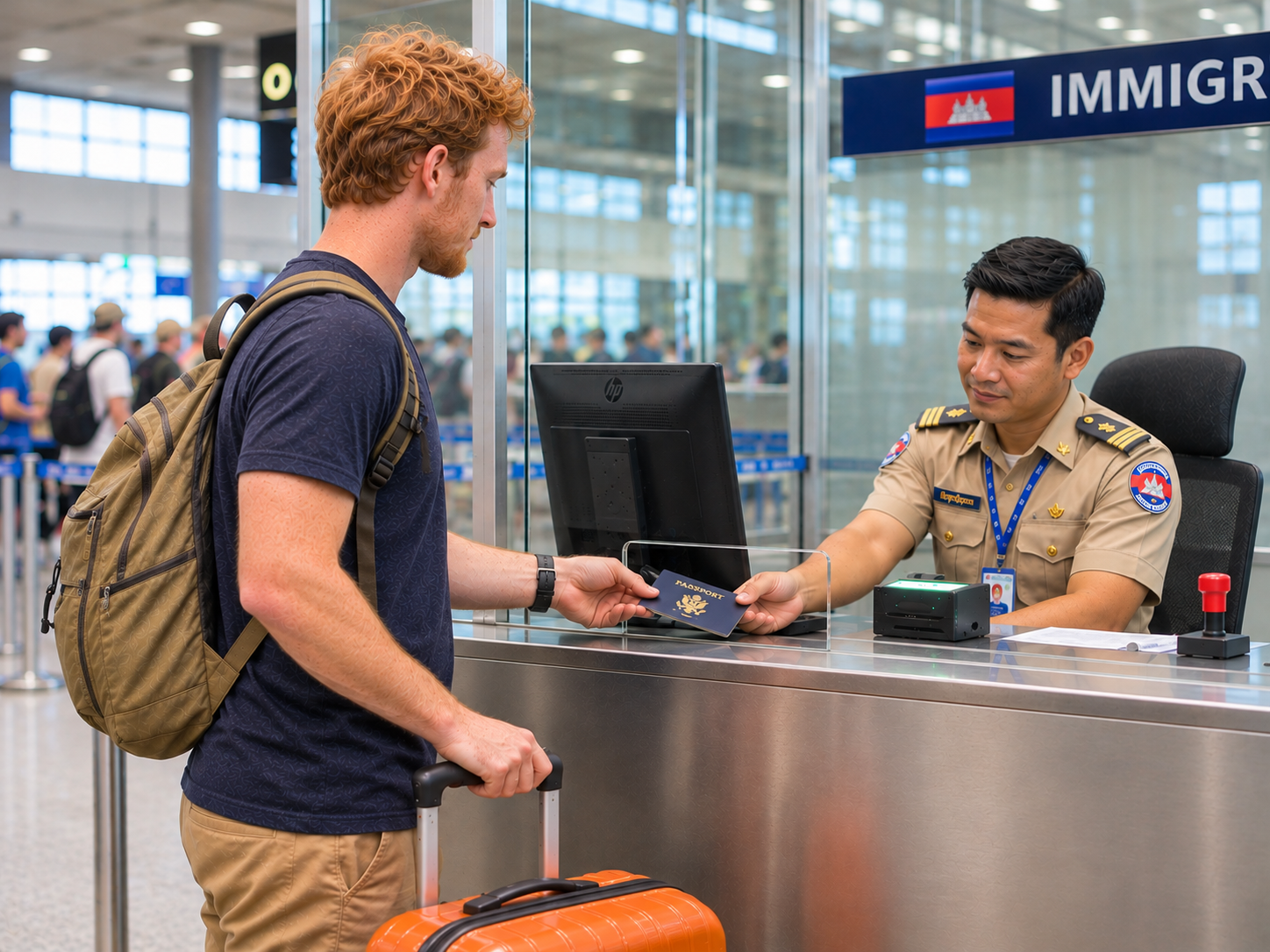
From AVSE-TESOL’s perspective, assuming you’re eligible, there’s a lot to be said for securing your visa online before leaving home. You’ll have your visa approval in hand before departure, reduce the likelihood of questions about your visa at airline check-in, and avoid the visa-on-arrival queue after a long flight. Perhaps most importantly, you’ll have resolved the visa application process before reaching the immigration counter at Techo International Airport.
Cambodia e-Arrival Card
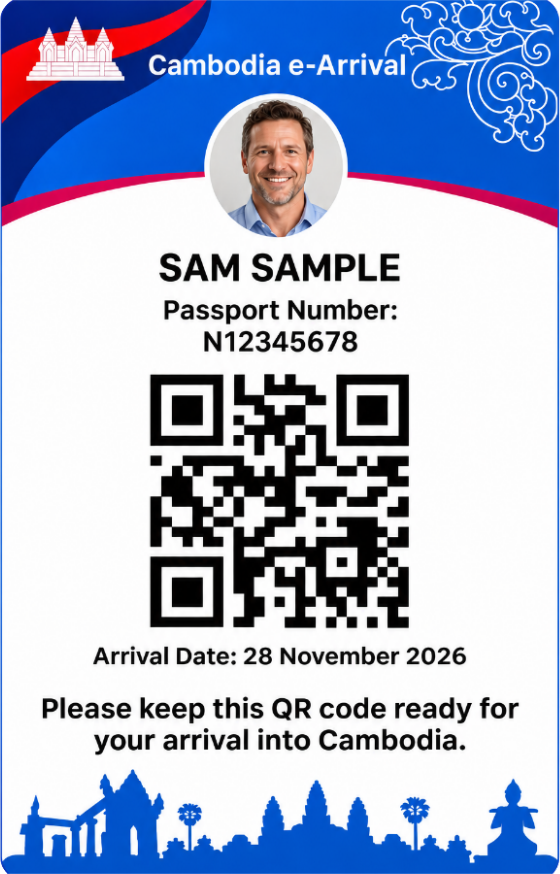
Separate from your visa, the Cambodia e-Arrival Card is a digital process that all travellers, including Cambodian passport holders, must complete when entering Cambodia through any of its three international airports: Techo International Airport (Phnom Penh), Siem Reap Angkor International Airport and Sihanouk International Airport.
The e-Arrival Card replaces a collection of paper forms, effectively streamlining arrival formalities.
The good news is that completing the e-Arrival Card takes around five minutes and is completely free when using the official Cambodian Government e-Arrival portal. You can submit the form at any time within the seven days before your arrival, including on the day you travel. Once completed, you'll receive an electronic confirmation with a QR code to present at immigration. The e-Arrival Card is not required when entering Cambodia through a land border.
Remember, the e-Arrival Card is an entry formality, not a visa, and completing it doesn't guarantee entry into Cambodia. As is the case worldwide, entry is ultimately at the discretion of immigration officials, acting in accordance with government policy.
Extending Your Cambodia Visa
Both the Tourist Visa (T Class) and Ordinary Visa (E Class) initially allow visitors to remain in Cambodia for up to 30 days. If you’d like to stay longer, it’s important to understand your extension options and make the necessary arrangements before your existing visa expires.
Tourist Visa extensions are relatively straightforward. The T Class visa can generally be extended in Cambodia for one additional 30-day period. That’s the limit. If you’re planning to remain in Cambodia beyond that period, particularly to pursue employment, you’ll generally need to leave the country and re-enter on a different visa, commonly referred to as a border run.
Ordinary Visa extensions offer much greater scope. Depending on your circumstances and eligibility, an E Class visa may be extended for one, three, six or twelve months. Cambodia has several extension categories, with EB (business/employment) and EG (seeking employment) being particularly relevant to prospective foreign English teachers. Each E Class visa subcategory has its own eligibility requirements and supporting documentation. Longer extensions may also permit multiple entries into Cambodia and make it easier to open a local bank account.
Importantly, an Ordinary Visa extension and a Cambodian work permit are two separate matters. Having the appropriate visa extension doesn’t automatically give you permission to work.
Visa extensions can be arranged through the relevant Cambodian immigration authorities or an established visa agent. Our Phnom Penh team can refer you to trusted local visa agents for your consideration. Fees vary according to the extension category, duration and any additional service charges.
One final tip: Keep a close eye on your visa expiry date. Allow sufficient time to organise an extension, particularly if supporting documentation is required. Ultimately, your visa status is your responsibility.
Cambodian Work Permits for English Teachers
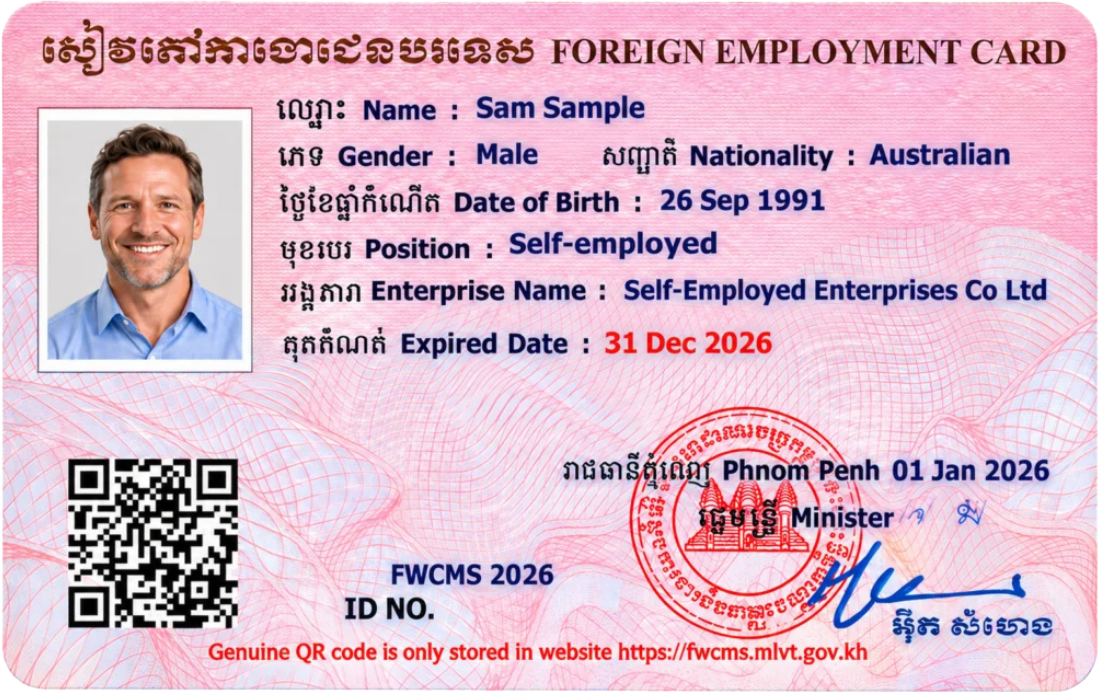
If you’re planning to take up a paid ESL teaching job in Cambodia, having the appropriate visa is only part of the picture. Foreign nationals working in Cambodia generally also require a valid work permit, issued through the Cambodian Ministry of Labour and Vocational Training.
The good news for prospective English teachers is that Cambodia takes a more flexible approach to academic qualifications than some neighbouring countries. For example, a university degree is not generally a mandatory requirement for obtaining an English teaching-related work permit, although individual schools may prefer or require one.
For English teaching positions in Cambodia, employers commonly expect foreign applicants to hold a recognised TESOL, TEFL or CELTA qualification, such as the Australian Government-regulated TESOL qualification offered by AVSE-TESOL in Phnom Penh. A recent police background check from your home country or another accepted jurisdiction is also a core requirement for prospective teachers. Additional documentation may be necessary depending on the employer, your circumstances and government requirements at the time.
Preparing Your Documents
While many ESL teaching destinations require foreign teachers to have their key documents notarised and legalised, which can be an expensive process, Cambodia does not routinely require this level of document authentication. That said, requirements can change without notice, and individual employers may have their own documentation policies. It’s worth checking with our Phnom Penh team about the latest document requirements before spending money on notarisation or legalisation.
There’s a lot to be said for preparing your documents thoroughly before leaving home. Even a seemingly minor documentation error can become a major obstacle, potentially a deal breaker. Having the appropriate qualifications, a recent background check and authenticated documents where necessary can help avoid complications when employment opportunities arise.
Arranging Your Work Permit
Increasingly, schools in Cambodia expect prospective teachers to have extended their Ordinary Visa (E Class) and obtained a work permit before attending a job interview. This represents a significant shift in the employment process. Previously, schools commonly assisted newly recruited teachers with visa extensions and work permits. Nowadays, much of that responsibility rests with the individual teacher.
Our Phnom Penh team is on hand to answer your questions, explain the visa extension and work permit process, and connect you with established local agents who can assist. Applications, payments and original passports remain the responsibility of the applicant and the relevant authorised service provider.
Cambodia Visa and Work Permit Costs
We’ve already covered the initial visa application costs in our Tourist Visa (T Class) versus Ordinary Visa (E Class) comparison. Let’s now look at the costs associated with extending an Ordinary Visa for 12 months and obtaining a work permit to teach English in Cambodia.
Your visa extension and work permit are two separate requirements, although both are frequently arranged at the same time through a local visa agent. As a general guide, you can expect to pay approximately US $550 in total when using an agent to arrange both documents.
Here’s an indicative breakdown:
- 12-month Ordinary Visa extension: US $290–$320
- 12-month work permit: US $200–$230
These figures are estimates, not fixed government fees. Actual costs can vary depending on the length of your visa extension, the documentation you have available and the fees charged by your chosen agent.
While it’s possible to manage some aspects of the process yourself, engaging an experienced local agent can save considerable time and frustration. For most newly arrived English teachers, the modest additional expense is a sound investment.
Will your employer cover these costs? Some Cambodian schools reimburse foreign teachers for visa extensions and work permits, at least partially, while others expect teachers to cover these expenses themselves. It’s worth clarifying this before accepting a teaching position and ensuring any agreed reimbursement arrangements are included in your employment contract.
Border Runs and Visa Changes
If you’ve spent time browsing Facebook groups or online forums about teaching English in Cambodia, chances are you’ve come across the term border run.
In simple terms, a border run involves leaving Cambodia and re-entering with a new visa. This might be necessary to stay in Cambodia longer or, more importantly for prospective English teachers, to get onto the correct visa pathway for employment.
Let’s face it, border runs can be inconvenient, time-consuming and an unwelcome expense. Nevertheless, they’re manageable when circumstances require one. If you find yourself needing a border run, the AVSE-TESOL team in Phnom Penh will be on hand to guide you through the process.
How much does a border run cost?
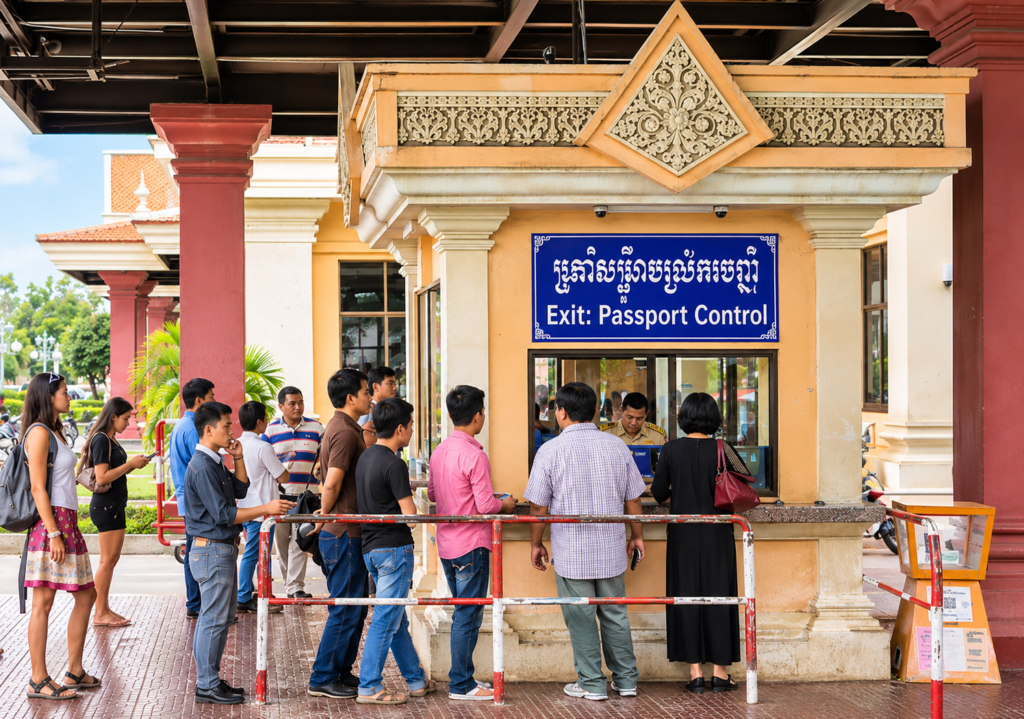
As a general guide, a border run from Phnom Penh to the Vietnamese border costs approximately US $120–$220, depending on your nationality, visa circumstances and the agent you engage. The agreed fee will typically cover visa-related costs, agent assistance and return bus transport. Expect the process to take the better part of a full day. Delays are not uncommon.
When might a border run be necessary?
If you enter Cambodia on a Tourist Visa (T Class) but subsequently decide to pursue employment, you’ll need to leave the country — a border run — and re-enter on an Ordinary Visa (E Class) before applying for an employment-related visa extension and work permit.
For passport holders from certain countries, entering Cambodia initially on a Tourist Visa and subsequently completing a supervised border run may be a necessary step towards ultimately securing the correct visa status for employment. Fair? No. Reality? Yes.
Ideally, you’ll never need to undertake a border run. However, understanding the process and potential costs beforehand means there’ll be fewer surprises if one becomes necessary.
How AVSE-TESOL Can Help
With AVSE-TESOL, you have an experienced team physically based in Phnom Penh, ready to lend a helping hand with your visa and work permit-related matters.
Visa requirements, entry procedures, documentation and immigration practices are part of our everyday conversations with prospective and enrolled students. Our guidance is informed by what’s happening on the ground, not simply what appears on government websites or social media.
Whether you’re unsure which visa to apply for, need help understanding documentation requirements or find yourself facing an unexpected border run, our Phnom Penh team is available to provide practical guidance and help you connect with a local visa agent when necessary.
We can’t make immigration decisions, issue visas or approve work permits — those responsibilities rest exclusively with the Cambodian Government. What we can do is help you navigate the process with greater confidence.
Frequently Asked Questions
Which visa do I need to teach English in Cambodia?
If you’re planning to teach English in Cambodia, ideally you should enter the country on an Ordinary Visa (E Class). Unlike a Tourist Visa, it provides a pathway to employment-related extensions of up to 12 months, provided you meet the relevant requirements and have the necessary documentation.
Can I change a Cambodia Tourist Visa to an Ordinary Visa without leaving the country?
Do I need a job offer before applying for a Cambodia Work Permit?
In practice, some foreign English teachers arrange their employment-related visa extension and work permit through a local agent before attending job interviews. However, eligibility and documentation requirements can vary, and a work permit application may require employer-related information. It’s important to clarify your circumstances with a reputable agent before proceeding.
How long can I stay in Cambodia on an Ordinary Visa?
How much does a Cambodia visa extension and Work Permit cost?
As a general guide, you can expect to pay approximately US $550 in total when using a local agent to arrange a 12-month Ordinary Visa extension and work permit. Actual costs may vary depending on your circumstances, documentation and the agent’s fees.
Can I teach English in Cambodia without a university degree?
Can AVSE-TESOL arrange my Cambodia visa and Work Permit?
AVSE-TESOL is a licensed vocational education and training provider in Cambodia, not a visa or work permit agency. Our Phnom Penh team provides practical guidance on visa requirements, documentation and entry procedures, and can connect you with reputable local agents who specialise in these matters.