
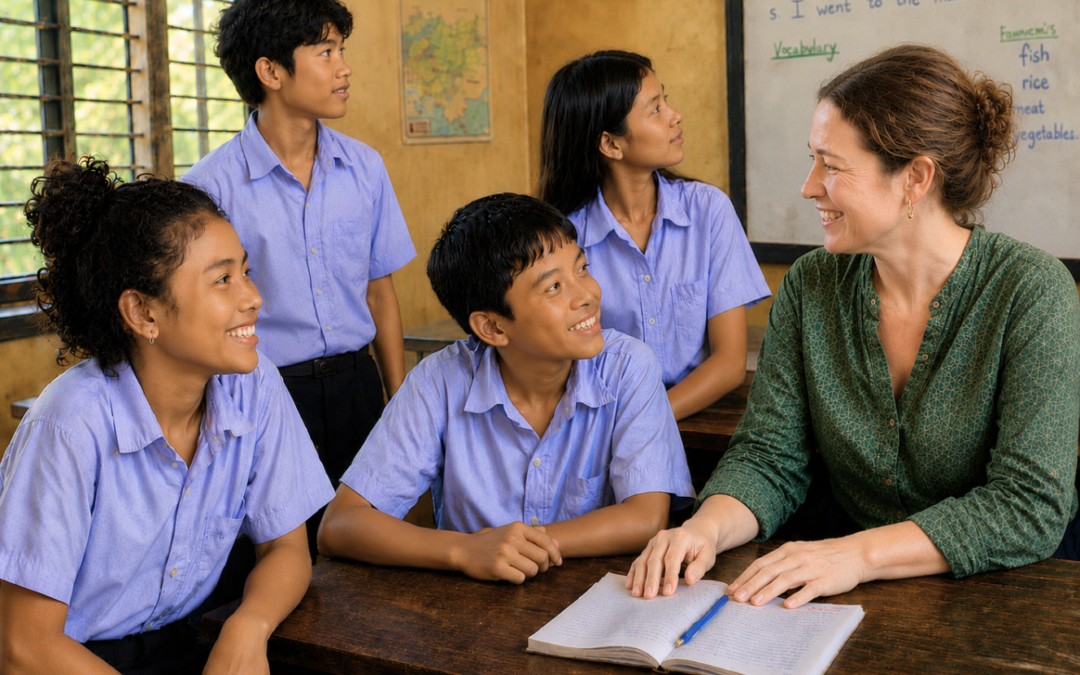
Travelling to Cambodia to work as a foreign English teacher is an opportunity to immerse yourself in a culture that is both fascinating and, at times, surprising. The Kingdom of Wonder, as Cambodia is commonly known, is unlike anywhere else in Southeast Asia. While many teachers arrive expecting affordable living, friendly people and excellent food, they quickly discover that Cambodia has unique customs, traditions and social norms that can feel unfamiliar at first. In other words, culture shock in Cambodia is real and to be expected.
Making an effort to understand a handful of key cultural nuances before arriving in Cambodia is time well spent. It will help reduce the impact of culture shock during your first few months in the country.
Understanding Culture Shock in Cambodia
True, cultural nuances in Cambodia are so plentiful that you could make yourself unwell trying to understand every single one. Then, just when you think you’ve covered the full gamut, another noteworthy custom or social norm will surface.
Think of this blog post as a starting point. The following five cultural observations are among the most noticeable for foreigners experiencing life in Cambodia for the first time.
1. Common Cambodian Greetings
In Cambodia, how people greet each other depends on age and social status. It’s customary to greet the oldest or most senior person first and the youngest or least senior person last.
The traditional Cambodian greeting is called the ‘sampeah’. It consists of a slight bow with the hands pressed together in front of the chest, similar to a gesture of prayer. When a higher level of respect is warranted, the bow becomes more pronounced and the hands are held higher.
While foreigners are not expected to get it perfect, greeting Cambodian people in this way—particularly older people—is seen as a sign of respect and appreciation for local culture. Your attempt will be noticed and warmly received.
2. Family Life in Cambodia
Family is of the utmost importance to most Cambodians; it sits at the heart of social structure and everyday life.
Extended families often live under one roof, or at least within close proximity, allowing them to pool resources, provide care for one another and offer emotional support. It is common for family members to combine their earnings, creating greater financial stability and a shared responsibility for meeting household expenses.
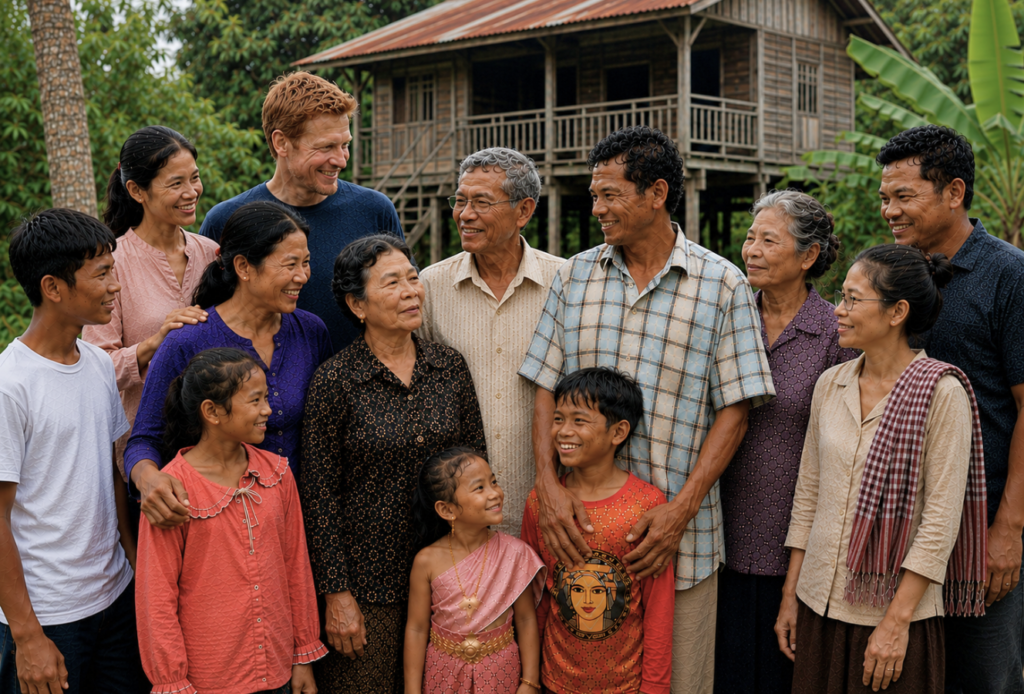
Older members of the family—parents, grandparents and great-grandparents—often play a key role when important decisions need to be made, especially in areas such as marriage, education, employment and religion. This can be an adjustment for foreigners who are accustomed to making major life decisions independently.
3. Traditional Values in Cambodia
Like elsewhere in the world, Cambodia has its share of consumerism—material, behavioural and social. Walk down almost any street in central Phnom Penh and you will see expensive imported cars, designer clothing and the familiar signs of modern urban life.
While the pressure on young Cambodians to keep up with their peers may not be as pronounced as in many Western countries, it is evident nonetheless. That said, at its heart, Cambodian society remains deeply traditional.
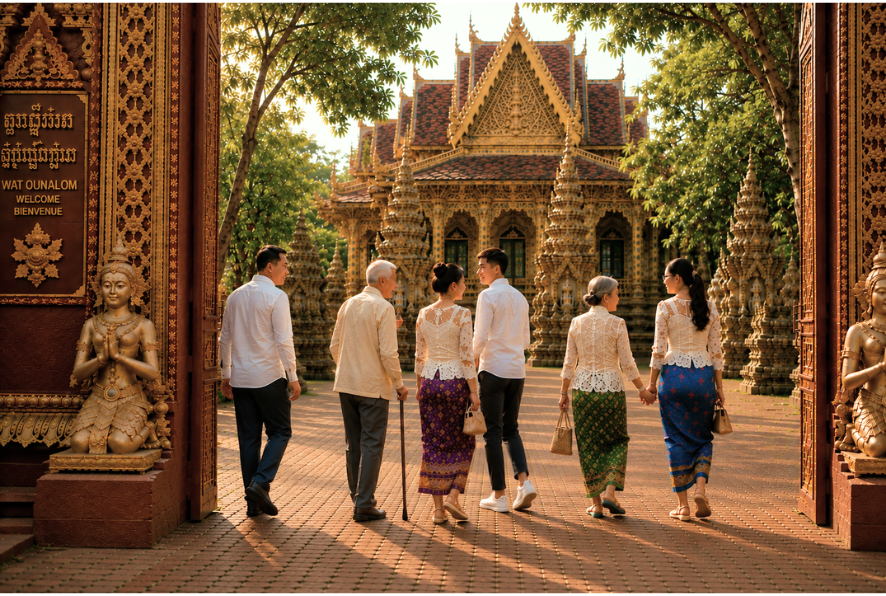
Public displays of affection are generally frowned upon. Most local people dress conservatively, and showing too much skin is considered impolite. Social behaviour is guided by modesty, humility and the importance of saving face. Visitors are expected to be polite and avoid behaviour that could be seen as confrontational.
Respect for teachers is another cultural characteristic that often surprises newcomers to Cambodia. In some countries, teaching can feel like an uphill battle. In contrast, teachers in Cambodia enjoy a high level of respect. I still remember the first time a Cambodian ESL student bowed in front of me. I was confused until a colleague explained the cultural significance of the gesture.
4. Cambodian National Pride
Cambodians genuinely love their country.
Whether you are in Phnom Penh, Battambang or a small rural village, you are likely to see national flags flying proudly, portraits of the King and other members of the Royal Family on display, and monuments commemorating people or events of national significance.
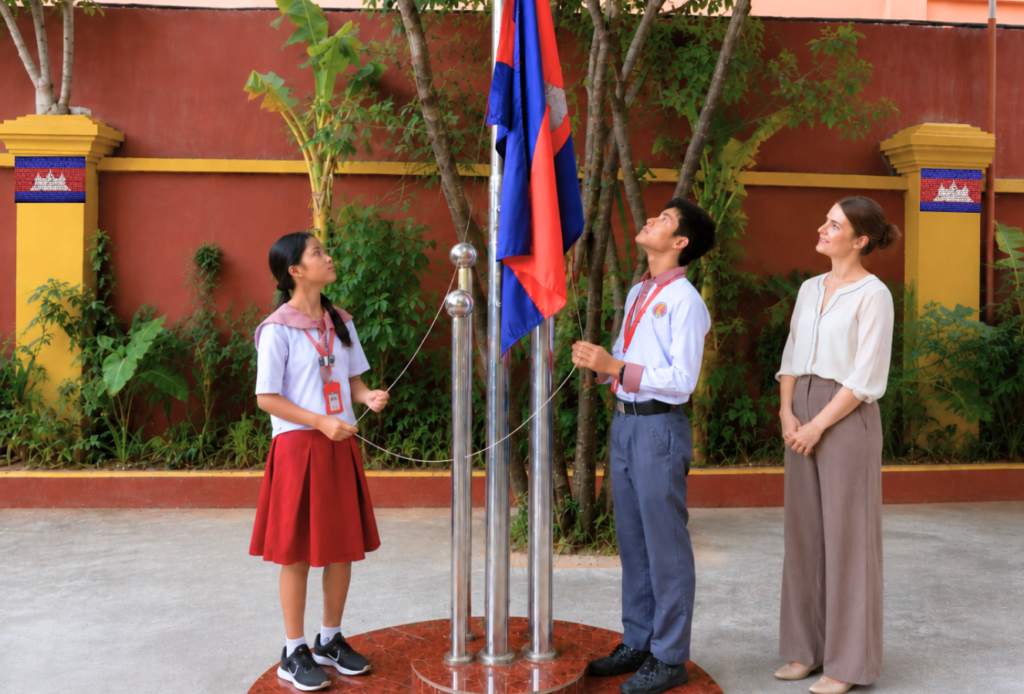
For foreigners from countries where public displays of national pride are more subdued, the visibility and intensity of national identity in Cambodia can be surprising at first. For example, when Cambodia competes in an international sporting event, it is common for entire families to gather around a television or for crowds to watch the event together in cafés and on huge screens in public areas across the country.
Cambodia currently has 28 official public holidays each year, more than double the number observed in my native Australia. On public holidays such as the Royal Ploughing Ceremony, the Water Festival and Victory over Genocide Day, national pride is on full display. Expect colourful parades, vibrant sounds, large crowds and an atmosphere of joyous celebration.
5. Cambodians Love to Celebrate
If the saying “any excuse for a party” originated in Cambodia, I could believe it.
For many foreigners, the surprising part is not that Cambodians enjoy celebrating special occasions, but the scale of the celebrations. Parties frequently extend beyond the family home and into the surrounding community, often involving large numbers of people and lasting much longer than many Westerners would expect.
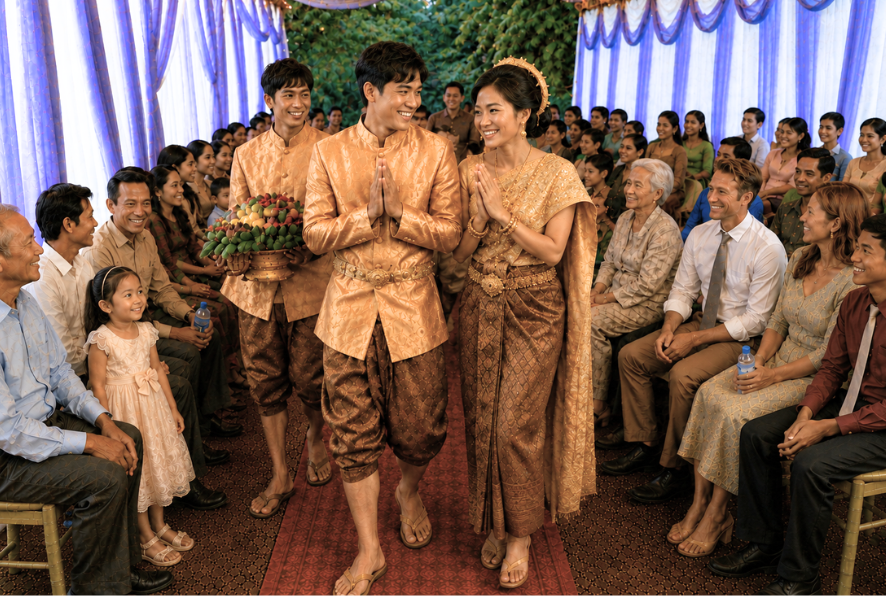
Weddings, birthday parties and the like can last for days and often take place in a huge tent (or multiple tents), sometimes completely blocking off thoroughfares. Those catering for a street party in Cambodia often set up a makeshift kitchen and a sizeable refrigeration unit—also in the street—to provide partygoers with food and drink for the duration of the event.
Who gets invited to these huge celebrations? Certainly, the extended family, but also pretty much anyone else who has even the loosest connection to the hosts. From my experience, even people who are simply passing by can find themselves joining the festivities.
Conclusion
The five cultural observations outlined in this blog post are just a small sample of what foreigners encounter when they first arrive in Cambodia. There are countless others.
Understanding the significance of greetings, family, traditional values, national pride and celebrations will go a long way towards helping you feel comfortable in the local environment and reducing the impact of culture shock in Cambodia.
There are many benefits to embracing life as a local rather than simply observing it from the sidelines. Make the effort. It is worth it.
About the writer: Cathy Ayr has been teaching English in Southeast Asia for the past three years, including a 12-month stint at Sovannaphumi School in Phnom Penh. Her experience navigating culture shock in Cambodia forms the basis of this article. Cathy holds a tertiary qualification in Anthropology and is TESOL certified through AVSE-TESOL in Ho Chi Minh City.
Recent Comments