
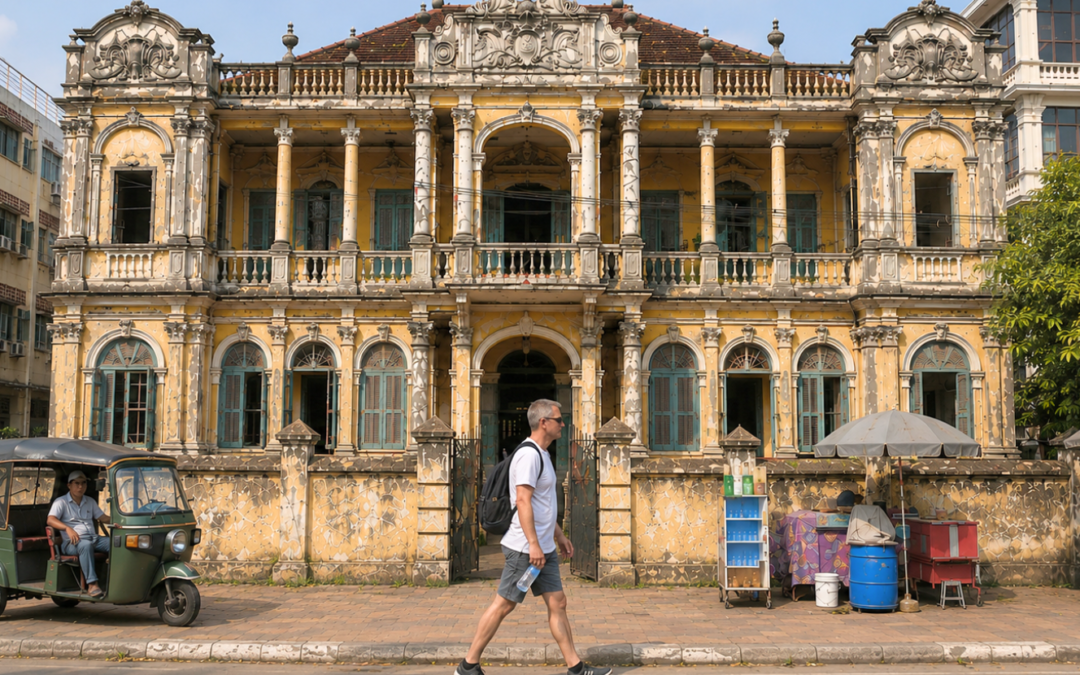
When word got out among my family and friends in Detroit, Michigan, that I was contemplating moving to Cambodia, the responses were interesting: “Gosh.” “That’s huge!” “Are you sure that’s wise?” “You’re joking!” “Where is it?” Overwhelmingly, though, one response stood out: “Why Cambodia?”
Cambodia isn’t an obvious destination for Americans considering a move abroad, for reasons that are entirely understandable. Over the past two centuries, the country has endured foreign occupation, border disputes, outright war, genocide, famine and profound social upheaval.
My decision to move to Cambodia almost three months ago was based on four key factors:
- an interest in the country’s French colonial past, driven by my own French-American heritage;
- a family story connected to the Vietnam War era that never had a proper ending;
- the lower cost of living; and
- a long-held desire to teach English in a foreign country.
In the sections that follow, I’ll look at each of those four factors in turn, starting with the French connection that first drew my attention to Cambodia. In addition, I will share my first impressions of Cambodian people and what I have learned since moving to Cambodia.
My French Connection to Cambodia
I grew up in a French-speaking household in the United States. As a result, I still instinctively use the word Cambodge, the French name for Cambodia. Some people find this amusing. Others assume it’s an error of some kind. For me, though, Cambodge is simply the name I grew up hearing.
More than 70 years after independence, French influence can still be seen in aspects of Cambodia’s architecture, food, language and everyday life.
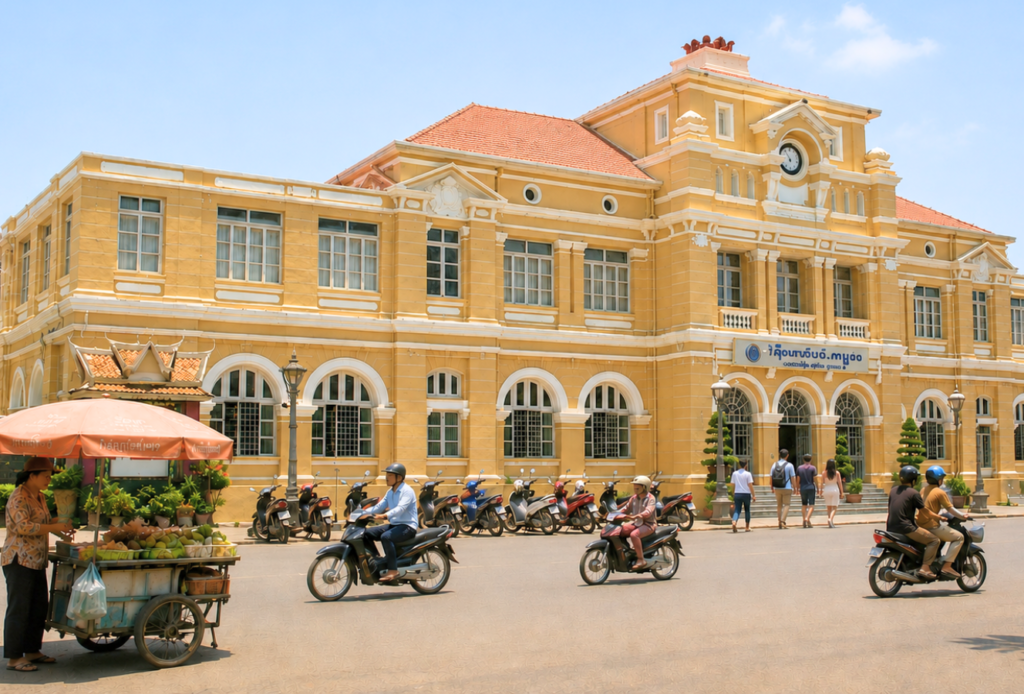
True, travelling to France itself would have been the most obvious choice for someone like me who wanted to explore their French connection. Cambodia, though, offered something different: an opportunity to experience part of that shared French history while also immersing myself in a culture that is uniquely Khmer. For me, that was hard to knock back.
A Family Story That Never Had a Proper Ending
The second reason that moving to Cambodia made perfect sense to me is even more personal than exploring the shared French connection.
Growing up in Detroit, I couldn’t help but notice that whenever Vietnam, Cambodia or Laos appeared on television, my father would quietly turn his attention to something else. On occasions, he would simply get up and leave the room. While I noticed it, I never gave it much thought.
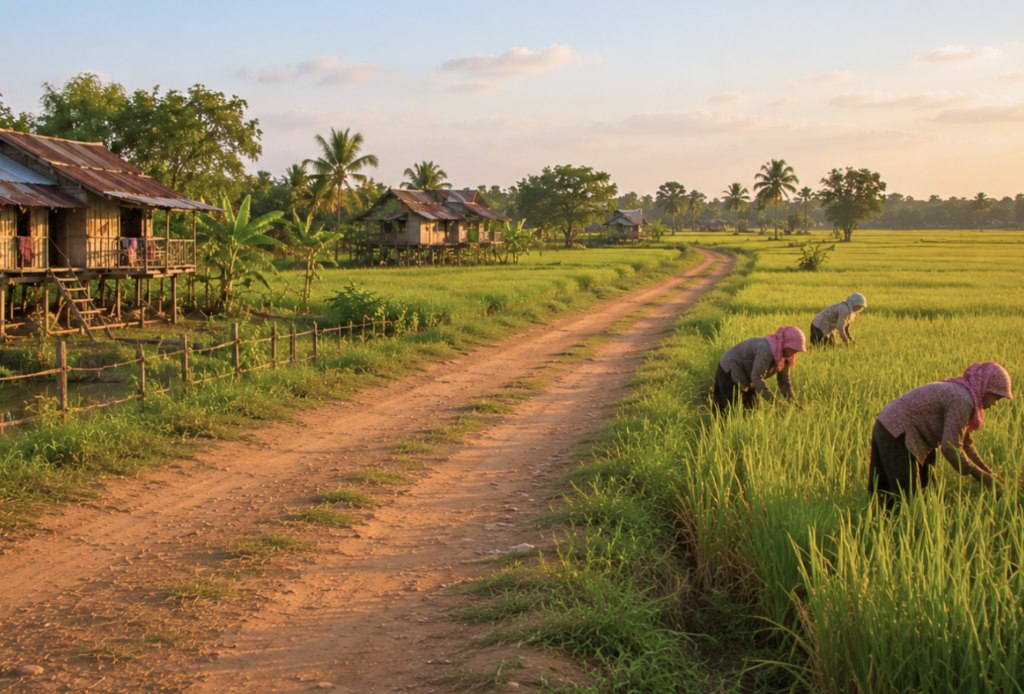
At my father’s funeral, I learned for the first time that he had an older brother named Jacques who was drafted to serve in the US military in Vietnam, literally two months after obtaining American citizenship. The story goes that Jacques disappeared somewhere in Cambodia’s Svay Rieng Province, close to the Vietnamese border, in March 1970. Jacques was presumed dead, but details surrounding his disappearance remained unclear.
Looking back, my dad’s reaction whenever Vietnam, Cambodia or Laos appeared on television made sense. It was a reminder of Jacques, his older brother. It was also a way of dealing with grief.
I cannot undo the past, and I don’t expect to solve a mystery that has remained unresolved for more than fifty years. What I can do while living in Cambodia is spend some time in Svay Rieng Province and search for whatever information may still exist. It might give surviving family members some measure of closure, something my father never found in his lifetime. It might not. Either way, it’s important to me.
The Cost of Living in Cambodia Is Appealing
It’s fair to say that exploring a shared French connection and searching for information about my Uncle Jacques were emotional reasons behind my decision to move to Cambodia. Some family and friends in Detroit might be shocked to learn that emotion had any influence whatsoever on my decision-making. They’ll be comforted to know that the prospect of enjoying a much lower cost of living also weighed heavily on my mind as I contemplated the move.
Like many people in the United States, I found myself in mundane jobs in Detroit, working long hours just to pay the bills. There was never much money left over each fortnight to actually live my best life — travel, eat out occasionally, indulge my passion for live music and suchlike. I genuinely felt like a mouse on one of those wheels that just keeps spinning, with no destination in sight.
My research on Google, YouTube and similar platforms before departing the United States painted a rosy picture of quality of life and affordability in Cambodia. The reality on the ground in Phnom Penh has been even better than I expected, driven in part by the favorable balance between what foreign English teachers can typically earn and everyday living expenses.
After arriving in Phnom Penh, I rented a modest one-room apartment downtown on Street 19. The rent is US$275 per month, with utilities adding another US$50 or so.
When accommodation is added to my everyday expenses, I can comfortably live in Phnom Penh for under US$700 a month without cutting corners and still save around 30% of my income. In contrast, I wasn’t saving a dime in America — and had to shovel snow for the better part of six months each year just to get out of my driveway.
Making the Move into ESL Teaching
Before moving to Cambodia, I knew I would need some form of income if I intended to stay for an extended period. Teaching English seemed like the obvious choice.
My research indicated that teaching opportunities were plentiful for foreigners with a good command of English, the right demeanor and valid certification. I was confident my English skills and personal demeanor would be viewed favorably, but the certification requirement was a glaring shortfall.
Fortunately, I found AVSE-TESOL not far from my downtown apartment, completed their in-class government-regulated TESOL program over four weeks, and landed a decent ESL teaching job within two weeks of finishing the course.

The starting salary of US$1,250 per month gave me immediate financial stability, structure and an opportunity to contribute positively to the local community. Importantly, I feel good about myself and the world around me. I didn’t feel that in Detroit.
First Impressions of Cambodian People
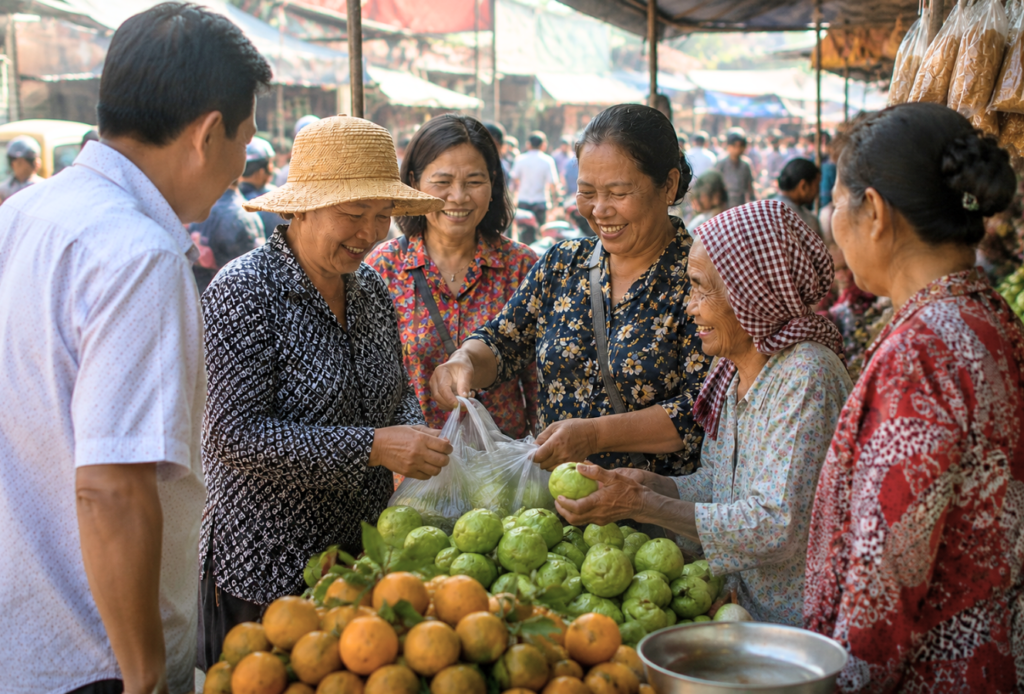
Ask me what stands out about life in Cambodia, and you might expect I’d mention Angkor Wat, the food, affordable living, the tropical climate or rewarding work. All of those things certainly deserve a mention, but overwhelmingly, the answer is the generosity of local people.
Cambodians smile a lot. It almost feels like an ingrained part of daily life. They’re patient. They go out of their way to help. Whether I’m interacting with neighbors, colleagues, students, market vendors or complete strangers, I have only encountered genuine kindness.
That’s not to say Cambodia is perfect or some kind of utopia. It’s not — far from it.
The country can be confronting at times: the heat, the dust, the visible poverty, the legacy of genocide, famine and landmines, and the rapid spread of foreign-backed casinos. For some visitors and would-be expats, those realities can be difficult to look past.
Even so, I’d argue that the generosity of local people, coupled with the opportunity to lead a happy and fulfilling life, outweighs the country’s shortcomings.
What I’ve Learned Since Moving to Cambodia
While I have only been in Cambodia for a relatively short period, what I’ve learned already could fill a book, with each chapter revealing another layer of the country and the people who live here. Allow me to shine a light on three lessons that may be especially relevant to the people most likely to read this post.
First, to a large extent, we control our own destiny. I was well and truly over what the United States was dishing up for me personally. So I threw caution to the wind and moved almost 9,000 miles from the place I had called home my entire life.
I’m nothing special. I don’t have a college degree. I’m a bit rough around the edges, with a trades background. In other words, I’m an average Joe. If I can take practical steps towards achieving a better quality of life, then so can you. From personal experience, putting one foot in front of the other is a great way to start the journey.
Second, working as a foreign ESL teacher in Cambodia has got to be right up there with the most rewarding jobs on planet Earth. The pay is exceptionally good when compared with the cost of living. Unlike in many Western countries, teachers are genuinely respected in Cambodia, occupying a position of high status within Cambodian culture.
The students are highly motivated, the work hours are sensible, and you get to see tangible results from your efforts in a relatively short period of time. All of those factors have a positive influence on how foreign ESL teachers in Cambodia see themselves and the world around them.
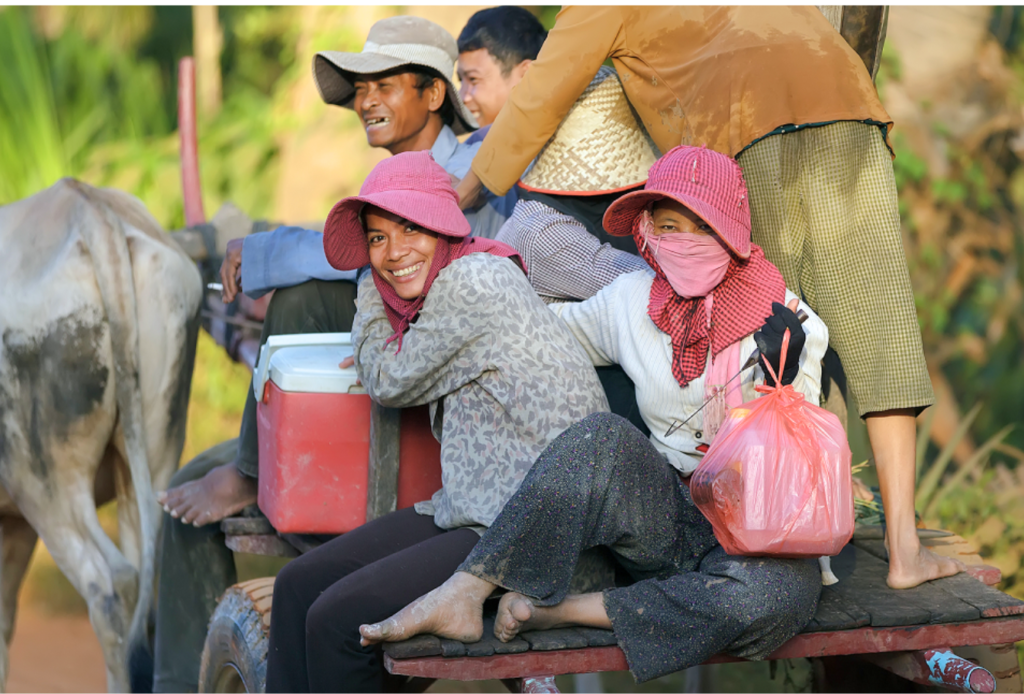
Third, there’s a lot that Western culture could learn from Eastern culture. For example, Cambodia has shown me that life does not always need to be rushed, measured, judged or overcomplicated. There is real value in patience, humility, family, community and remembering that the sun will come up tomorrow, whatever happens.
Cambodia has a way of slowing you down. There are constant subtle reminders that people matter more than schedules, relationships matter more than transactions, happiness comes from within, and a peaceful life is something to be treasured.
Conclusion: Was Moving to Cambodia the Right Decision?
Nobody knows what’s around the corner, and the reality is that I’ve only been on the ground in Phnom Penh for a few months. That said, if I were asked today, “Was moving to Cambodia the right decision?”, the answer would be a resounding yes.
The reasons for that resounding yes are both practical and deeply personal. I’m reconnecting with my French heritage every time I take a walk through the streets of Phnom Penh. I love the more affordable lifestyle. Working as an ESL teacher in Cambodia allows me to fulfil my long-held dream of teaching English in a foreign country. During the upcoming school holidays, I’ll travel to Svay Rieng Province to begin my search for information about Jacques, my father’s brother, who disappeared during the Vietnam War years. All of those factors played a role in my decision to move to Cambodia.
Beyond all of the above, it’s the generosity, patience and warmth of local people that have made Cambodia feel like home. For that reason alone, moving here was the right decision. I’m exactly where I need to be.
About the writer: Antoine Le Bec has French-American heritage. He travelled to Cambodia in early 2026, partly to explore his French roots, seek closure on a family tragedy dating back to the 1970s, enjoy a lower cost of living and teach English in Phnom Penh. Antoine’s blog post, Moving to Cambodia: I Left America for a New Life in Phnom Penh, is heartfelt, personal and easy to read. Enjoy!
Recent Comments