
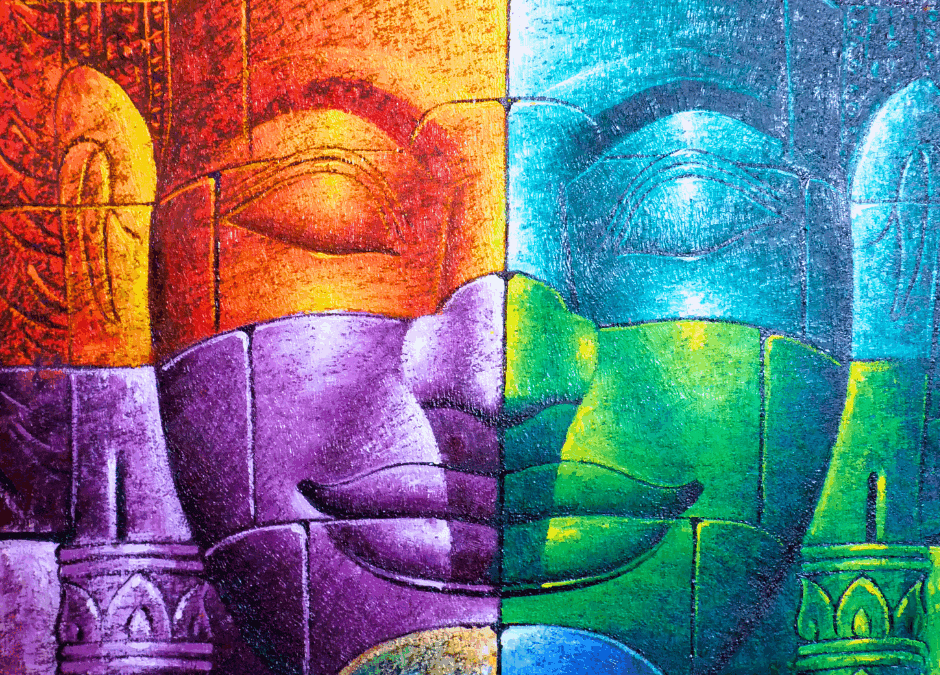
Cambodia cultural shock is real — even for seasoned travellers and foreign English teachers — and it often shows up in small, everyday moments. Expect extraordinary — and there’s a good chance you’ll keep your sanity. Taking the time to grasp a handful of common cultural nuances before you arrive is wise — and polite. It will make your first few weeks noticeably easier.
True, cultural nuances in Cambodia are so plentiful that you could make yourself unwell if you were inclined to learn a thing or two about every single one. Then, when you think you’ve covered the whole gamut, another one that’s at least noteworthy will surface. To make this blog post more readable, I will touch on five Cambodian cultural nuances (only). For most newcomers, these five alone will limit Cambodia cultural shock noticeably in the first few weeks. It’s about sewing the seed of cultural immersion. Let’s get into it.
Greetings and the Sampeah (Respect Matters)
In Cambodia, how people greet each other often depends on age and social status. It’s customary to greet the oldest or most senior person first and the youngest or least senior person last.
The traditional Cambodian greeting is called the sampeah — and consists of a slight bow, with hands pressed together in the middle of the chest, like people commonly do when praying. When a higher level of respect is warranted, the bow is more pronounced, and the hands are held higher.
While foreigners aren’t expected to get it perfect, greeting Cambodian people this way — especially older people — is a sign of respect. If you’ve just arrived in Phnom Penh to work as a foreign English teacher, try a traditional sampeah when you’re introduced to the school principal. It will undoubtedly be noted — and appreciated.
One small gesture can go a long way in Cambodia.

The Extended Family in Cambodia
The extended family unit is of the utmost importance to most Cambodians. It sits at the core of social structure and everyday life.
Extended families often live together or at least close by, which allows for sharing resources, caregiving responsibilities and emotional support. It’s commonplace for members of an extended family unit in Cambodia to pool earnings, offering greater financial stability — and shared responsibility for meeting expenses.
Older members of the family — parents, grandparents and great-grandparents — often play a key role when important decisions need to be made, especially in areas such as marriage, education, employment and religion.
Early on in Cambodia, you’ll notice how much everyday life revolves around the extended family — influencing decisions and priorities in ways you may not expect. In my experience, a little patience and flexibility go a long way.

Tradition, Modesty, and “Saving Face”
Like elsewhere in the world, Cambodia has trappings of consumerism – material, behavioural, and social. Walk down any street in central Phnom Penh, and you will see expensive imported cars and people wearing designer clothes. While the pressure on young Cambodians to keep up with their peers might not be as pronounced as in Western developed countries, it’s evident nonetheless.
That said, at its heart, Cambodian society is still very traditional. Affection in public is frowned upon. Most local people dress conservatively; showing too much skin is considered impolite.
Social behaviour is guided by modesty, humility and harmony. Saving face is pivotal. Visitors are expected to be polite and avoid actions that could even remotely be regarded as confrontational. When in doubt, take the softer approach.
Teacher Respect in Cambodian Schools
You’ll be pleased to learn that local tradition also requires students to respect teachers. In some countries, teachers take their life into their hands once they enter a school building. In stark contrast, in Cambodia, teachers are revered.
To this day, I still remember when the first Cambodian student bowed in front of me. I wondered what I’d done until a colleague explained the cultural nuance.
For many newcomers, the respect teachers receive from students – and the wider community – is a very nice surprise.
National Pride, Public Holidays, and Big Parties
Cambodians genuinely love their country. No matter where you are — whether in a large city like Phnom Penh, a regional location like Battambang or the countryside — you’ll find national flags flying proudly, portraits of the King and other royal family members on display, and monuments seemingly on every other street corner commemorating people or events of national importance.

When a Cambodian national team competes in an international sporting event, it’s not unusual for an entire extended family to gather around a TV in the living room — or to see crowds watching the event in cafés, malls, or even on sidewalks. The energy is electric — you’ll feel like you’re right there in the stadium.
Cambodia currently has 28 official public holidays per annum, more than double that of my native Australia. On a public holiday — such as the Royal Ploughing Ceremony, the Water Festival, or Victory over Genocide Day — national pride is on full display: colourful parades, vibrant sounds, large crowds, and an atmosphere of joyous celebration. Here’s some more good news: if you’re on a 12-month teaching contract, you’ll get paid for all the public holidays.
I wouldn’t be surprised to learn that the age-old saying “any excuse for a party” originated from Cambodia — big celebrations are one of the country’s more quirky cultural nuances. Cambodians of all ages and socio-economic backgrounds love to celebrate; the bigger and louder, the better. Weddings, birthday parties and the like can last for days and often take place in a huge tent (or multiple tents), sometimes blocking off thoroughfares.

At street parties in Cambodia, organisers often set up a makeshift kitchen — and even a sizable refrigeration unit — right there in the street. Food and drinks flow for the entire event. Who gets invited? The extended family, sure, but also anyone with a loose connection and, in my experience, people who are simply passing by.
If you lean into these moments, you’ll settle in faster in Cambodia.
Conclusion
In this post, I’ve highlighted five cultural nuances you’ll see firsthand as a foreign English teacher in Cambodia — and there are plenty more that may make it into a future blog post. For now, if you familiarise yourself with Cambodian cultural nuances related to greetings, the extended family, customs and traditions, national pride and parties, you’ll make real progress towards earning respect from local people — limiting Cambodia culture shock and settling into Cambodian society.
There are a lot of positive aspects to living like a local. Make the effort. It’s worth it.
About the writer: Cathy Ayr has been teaching English in Southeast Asia for the past three years including a 12-month stint at Sovannaphumi School in Phnom Penh. She holds tertiary qualifications in Anthropology and TESOL certification from AVSE-TESOL in Ho Chi Minh City.
Recent Comments