
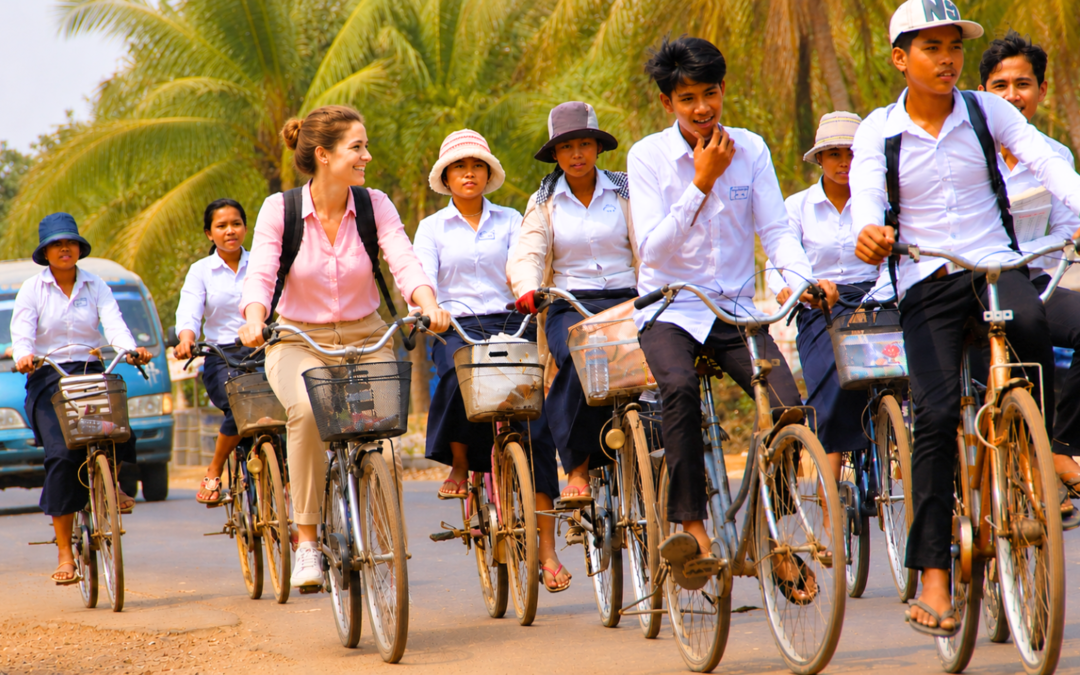
For aspiring expatriates (expats) who dream of immersing themselves in new cultures while earning a decent living, teaching English overseas has long been a favoured way to turn that ambition into reality. In recent years, Cambodia has emerged as a destination of choice for expats seeking an English teaching adventure in Southeast Asia. Why? From my first-hand experience, Cambodia’s popularity as an ESL teaching destination is driven by an insatiable demand for English language skills among the local population, genuine employment opportunities for those who can teach the language, low living costs, the warmth of the Cambodian people and an enticing expat lifestyle. Succinctly, teaching English to Cambodian students delivers a practical pathway to earn, explore, contribute and experience life in one of Southeast Asia’s most fascinating countries.
How Much Do Expat Teachers Get Paid?
Expat English as a Second Language (ESL) teachers in Cambodia typically work around 25 classroom hours a week — primarily Monday to Friday during daytime hours — and earn between US $800.00 and US $1,200.00 per month. I know of instances where teachers have secured salaries above US $1,200.00 monthly, but salaries within the range outlined above are more common.
Here are two things you can do to improve your chances of securing a salary closer to the higher end of the typical range.
First: Ensure your documentation is in order — a government-regulated TESOL qualification like the one offered by AVSE-TESOL in Phnom Penh, a criminal record check from your home country that is no more than six months old, and a sharp one-page CV that includes a professional-looking head-and-shoulders photograph. While many schools in Cambodia prefer expat teachers who hold a degree, a degree is not a mandatory requirement for securing a teaching-related work permit and related visa in Cambodia.
Second: Be respectful and prepare thoroughly before the interview. Listen carefully, answer questions politely and present yourself professionally. Remember that you are a visitor in Cambodia, and schools will expect you to show cultural awareness, humility and respect for local ways of doing things. The interview process is not the time to impose Western expectations or arrive with an inflated sense of entitlement. A positive attitude, modesty and genuine enthusiasm for working with Cambodian students can leave a strong impression.

Low Cost of Living for Foreign Teachers in Cambodia
To reach an informed view on whether teaching English to Cambodian students pays well from a foreign teacher’s perspective, local cost-of-living factors need to be considered. It’s fair to say that, on almost any measure, the cost of living in Cambodia is a fraction of what many Westerners experience in their home countries. While you may not earn as much as you could in your home country, Cambodia’s staggeringly low cost of living can still make working as a foreign teacher financially attractive.
In many Western countries, housing costs are exorbitant. In Cambodia, however, accommodation is comparatively inexpensive. For example, in Phnom Penh and Siem Reap — where many teaching jobs are located — you can generally find a furnished and comfortable apartment in a desirable area for approximately US $250.00 to US $350.00 per month.
You’ll also be pleased to know that food and drink in Cambodia are inexpensive by Western standards. With a daily food budget of around US $10.00 to US $12.00, you can eat very well and still enjoy the occasional beer or wine. If you’re comfortable eating Khmer street food, it can actually be cheaper to eat out in Cambodia than to cook at home.
Transportation is another major cost factor, and ESL teachers in Cambodia generally pay a fraction of what they might spend running a car or using public transport in their home country. Tuk-tuks are the preferred public transport option in Cambodia and, at roughly US $1.00 per kilometre, they’re relatively affordable. Those planning to teach English to Cambodian students for an extended period — say six to twelve months or longer — may prefer to rent a motorbike for approximately US $60.00 a month and enjoy the freedom that comes with it.
Lifestyle Benefits – Teaching English to Cambodian Students
The favourable salary-to-cost-of-living ratio enjoyed by foreign English teachers in Cambodia would mean far less without the appealing lifestyle that comes with the experience.
Many foreign teachers in Cambodia work less and save more than they would in their home country. When you add the relaxed pace of life, the generous hospitality of the local population and the country’s cultural richness, it’s easy to see why Cambodia has become such a popular destination for both aspiring and seasoned ESL educators.
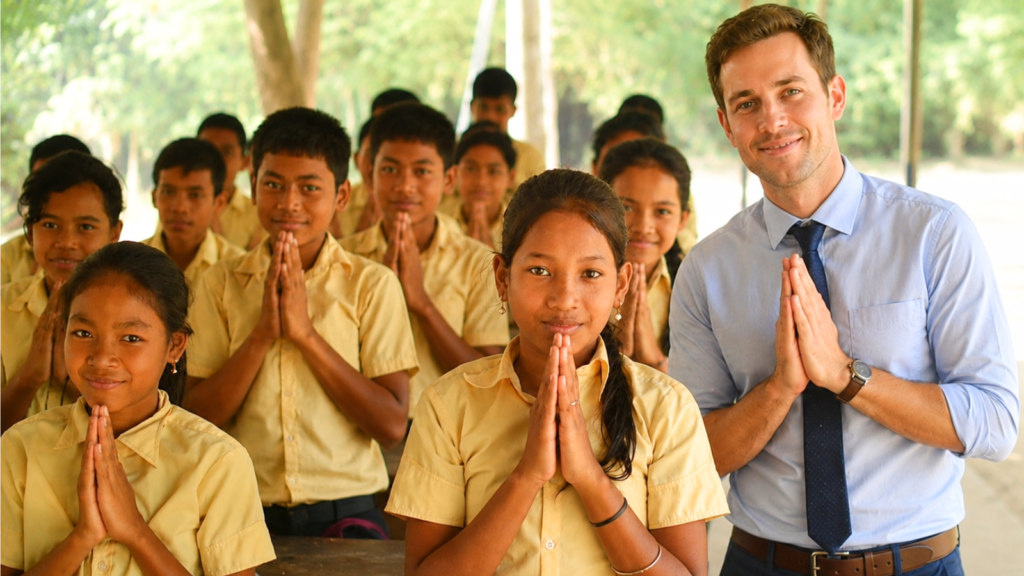
Outside the classroom, Cambodia offers something for everyone. If you enjoy café culture, Phnom Penh and Siem Reap are filled with trendy coffee shops, riverside restaurants, rooftop bars and lively markets that attract both expats and local people. History buffs can immerse themselves in everything from the awe-inspiring temples of Angkor Wat to the more recent and confronting history linked to foreign occupation, civil conflict and the Khmer Rouge era.
The arts and cultural scene in Cambodia is vibrant. Traditional dance, museums, art galleries, live music venues and cultural festivals are common features of life in towns and cities across the country. Buddhism also plays a visible role in everyday life, contributing to Cambodia’s distinctive atmosphere through stunning pagodas, spiritual traditions and classic Khmer architecture. If fitness is your thing, you’ll be spoilt for choice with cheap, welcoming gyms, riverside boardwalks and open spaces.
Importantly, Cambodia is relatively easy to navigate, making weekend travel and exploration both affordable and accessible for foreign teachers. Being centrally located in Southeast Asia also means travel to neighbouring countries — Vietnam, Thailand, Laos and beyond — is cheap and quick.
Get your TESOL Certificate at AVSE-TESOL
Allow me the opportunity for a shameless plug.
Earlier in this article, I mentioned that government-regulated TESOL, TEFL or CELTA certification is the core qualification you’ll need to work as a paid English teacher in Cambodia. Whether you’re a foreigner or a Cambodian citizen, you can obtain TESOL certification through AVSE-TESOL in Phnom Penh. Delivered in-class or online, TESOL certification from AVSE-TESOL is accredited by the Australian Government and genuinely internationally recognised.
Conclusion
Foreign ESL teachers in Cambodia typically earn between US $800.00 and US $1,200.00 a month, markedly less than teachers in Western countries, but high by local standards. When a high salary by local standards is combined with Cambodia’s low cost of living and attractive lifestyle, it’s easy to see why the country has gained traction as a premier ESL teaching destination.
With Australian Government-regulated TESOL certification from AVSE-TESOL, you could be teaching English to Cambodian students in Phnom Penh, Siem Reap, Battambang or elsewhere in the country sooner than you think.
About the writer: Bridgette Mackay is from Wellington, New Zealand. She has taught English in Phnom Penh since July 2022. Bridgette completed the Australian Government accredited TESOL course at AVSE in Ho Chi Minh City, Vietnam, but chose Cambodia as her teaching destination. Why? According to Bridgette, it’s all about the local people.
Recent Comments