

Bottom line: If you’re wondering is 40 too old to teach ESL in Cambodia, the answer is no — 40 is rarely a barrier. It can be an advantage. If you’re 40+ and this issue is on your mind, here’s some terrific news: there are decent ESL teaching jobs in Cambodia right now for people with your demographic.
True, there are plenty of millennials teaching in Cambodia. Still, with a growing economy and a strong demand for English language skills, older folks are competitive — and, in many instances, preferred candidates. Here are eight reasons why teaching in Cambodia after 40 can be a terrific idea:
There’s a classic expat lifestyle on offer
You’ll only spend around 25 hours (+/-) a week in the classroom
After expenses, you can save money each month without cutting corners
Teaching contracts mostly include paid public holidays
Greater stability: 12-month renewal contracts and related multi-entry visa arrangements are common
Eligible to open a local bank account
Embark on a new career path where you’ll see tangible benefits for your effort
Surrounded by like-minded friends

How old is too old to teach ESL in Cambodia?
In most cases, age isn’t the issue. Schools care more about professionalism, reliability, presentation, and confidence in the classroom.
People sometimes refer to a Cambodia TEFL age limit, but in reality it tends to be more about what a school needs, what you bring to the role, and how you present yourself than any strict rule.
If you’re worried about competing against younger applicants, the good news is you can reduce (or remove) that concern by being the candidate who looks prepared, credible, and easy to hire.
Valid Teaching Certification
TESOL/TEFL or CELTA certification is the core qualification that schools in Cambodia expect a foreign ESL teacher to hold.
Anecdotally, many younger teachers arrive with low-rigor or unregulated certificates. Holding valid, well-regarded certification (coupled with a professional appearance) helps you stand out and can nullify discrimination — real or perceived — around being 40+ years of age. It also reassures employers that you have the knowledge and skills to do the job well.
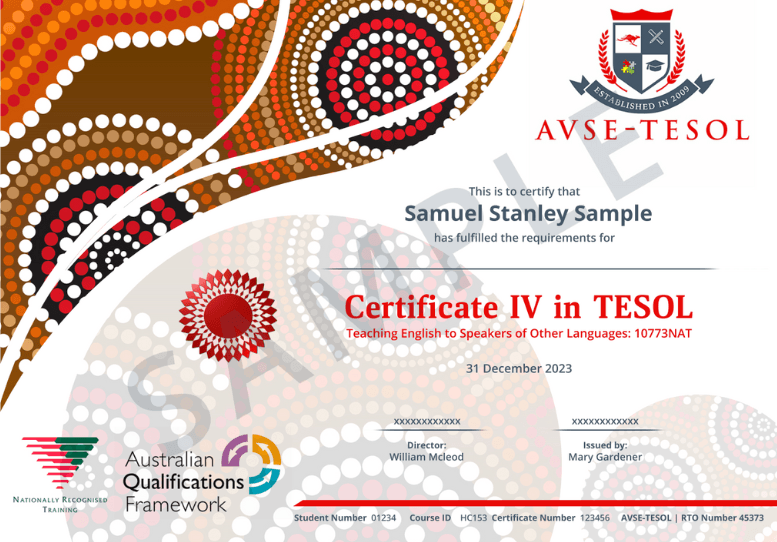
In Phnom Penh, the Australian Government-accredited TESOL program at AVSE-TESOL — and CELTA, offered by the Australian Centre for Education (ACE) — are government-regulated teacher training programs well respected by Cambodian schools. Both also welcome teacher-trainees who are 40+ years of age.
A sharp Curriculum Vitae (CV)
Having a sharp, one-page CV (résumé) when you’re 40+ and searching for a job cannot be overstated. Your CV is your “shop window.” If prospective employers like what they see, there’s a much higher chance they’ll want to meet you.
Most employers are busy and may receive many CVs from random applicants each week. One page is enough if you’re serious about capturing attention. More than one page often serves no purpose because it’s less likely to be read.
In Cambodia, employers commonly expect a passport-style photograph on your CV. Like it or not, the photograph is often the first thing the employer will notice — so invest in a professional-looking photo that presents you in your best possible light.
To the right of your picture, add your first name and family name in bold text (around 24-point font size). Immediately under your name, add your contact details, especially your email address and a local phone number if you have one. If you don’t have a local number yet, it’s usually best to list email only. Avoid listing a foreign phone number, as many employers will assume you’re abroad — and Cambodian schools typically prefer applicants who appear to be already on the ground.

I’d suggest using the following headings in your one-page CV:
Personal statement (around 60 words: what you bring to the table)
Qualifications (degree, diploma, certificates)
Employment history (last three jobs — emphasise any teaching/training angle)
Referees (it’s enough to note: “Available on request”)
Be culturally sympathetic
Being culturally sympathetic in Cambodia is pivotal — and it’s one area where many older candidates have a genuine advantage: more life experience, and often more exposure to different cultures.
Learning to work well with local people is central to longevity when teaching in Cambodia. Before arriving, there’s a good chance you had little reason to think deeply about what “cultural sympathy” involves. Why? Most people in your everyday life may have shared your own culture. In contrast, many people you encounter while teaching ESL in Cambodia won’t.
This isn’t rocket science. It’s simply about understanding, respecting, and being sensitive to beliefs and customs that differ from your own. As an ESL teacher in Cambodia, you’ll often be held in high esteem and welcomed — don’t let it go to your head. Remember you’re a visitor, and it’s not your job to “move the furniture around.” If adapting needs to happen, it will usually be at your end.
Add value beyond English
If you’re 40+ and concerned about competing against younger applicants, focus on adding value to your application — making it hard to say no.

In addition to English language skills, what else can you bring to the school community?
Do you play a musical instrument or sing?
Are you skilled in football, basketball, or another sport?
Do you speak languages other than English (for example French or Chinese) that can be useful in Cambodia?
Have you made it your business to become strong at exam preparation classes — IELTS, TOEIC, or TOEFL?
The more you can bring to the table, the more likely you’ll get the nod.
Conclusion
So, is 40 too old to teach ESL in Cambodia? The answer is a resounding no.
There are great opportunities available, a classic expat lifestyle in a low-cost tropical country, and plenty of roles for people who present professionally and take the work seriously.
People over 40 who want to teach in Cambodia can take several straightforward steps to improve their chances of getting hired. These include obtaining credible teaching certification, creating a sharp one-page CV, respecting Khmer culture, and finding ways to add value beyond English.
Embrace the challenge. Make the move.
About the writer: Simon Hall completed the Australian Government-accredited TESOL program at AVSE-TESOL in Phnom Penh in late 2023. He has been teaching in Cambodia for coming on two years. Simon was 40+ when he began teaching in Cambodia and is well-placed to comment on the opportunities and challenges connected with starting a teaching career abroad later in life.
Recent Comments