Massive demand for foreign & Cambodian English Teachers

Massive demand for foreign & Cambodian English Teachers

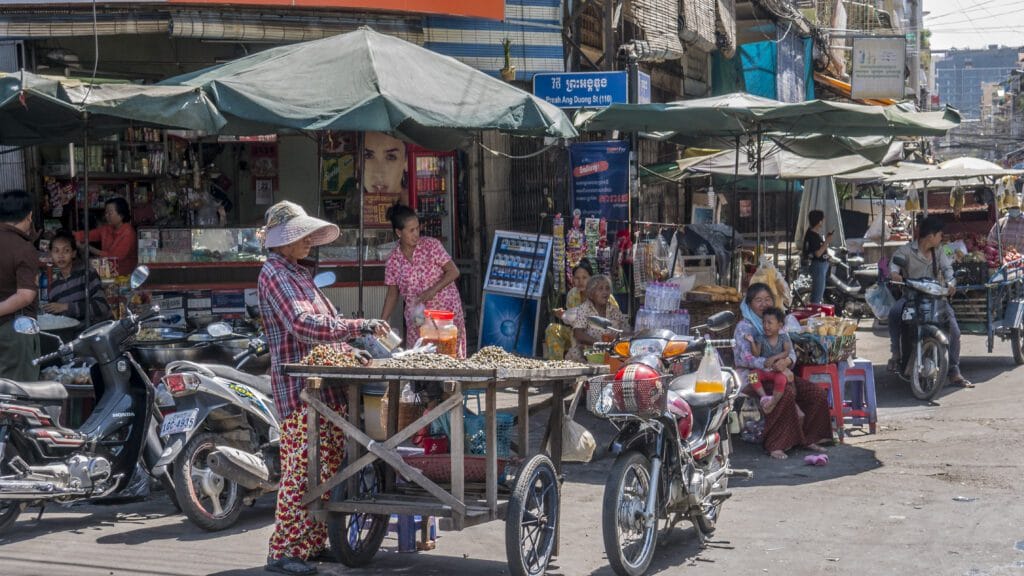
Cambodia is a land of natural beauty, awe-inspiring temples, and a vibrant culture. Local people are understandably proud of their country, and nowadays, tourists and expats alike love the place—it hasn’t always been like that. The expat community in Cambodia is flourishing, in part because one of the fastest-growing industries in the country is English as a Second Language (ESL) teaching and learning. The demand for both foreign and Cambodian English teachers is huge.


Why has the demand for foreign and Cambodian English teachers gone through the roof? It’s largely due to Cambodia’s rapidly developing economy, the drive towards self-sufficiency, and opening the doors to the outside world after years of unrest and hardship. Most importantly, Cambodian citizens acknowledge English proficiency as a valuable skill that provides a pathway to a better future. Country-wide, Cambodian citizens have bought into the idea that English, the ‘international language’, is paramount.


For a foreigner, teaching in Cambodia is the perfect way to establish a life for themselves in this dynamic country. From a local perspective, Cambodian English teachers are held in high esteem by compatriots and enjoy work conditions that are typically better than what’s available in the country’s mainstay industries.


cambodian english


In this article, we’ll go into a little more detail about Cambodia’s rapid development and how this has resulted in a callout for both foreign and Cambodian English teachers. Later, we will explain the benefits of acquiring a reputable, internationally recognized TESOL certificate, a core qualification for working as an English teacher, and how this will set you up for success in your career in Cambodia and beyond.


Economic growth

Cambodia’s economy continues to grow at an astounding rate. Here’s why this is occurring.


Direct investment by the Cambodian Government over the past ten to fifteen years has seen an improvement in road networks, close to a total rebuild of the Phnom Penh International Airport, and a raft of other eye-catching infrastructure projects. Moreover, foreign direct investment from countries like China, South Korea, Japan, and Australia has modernized Cambodia’s industrial sector.


Cambodia’s strategic location in Southeast Asia makes the country an ideal regional trade hub. By continuing to improve its infrastructure and invigorate economic policies, Cambodia is well-positioned for ongoing growth in the coming years. The need for English proficiency across countless sectors of the Cambodian economy is a direct byproduct of economic development. For example, in 2023, over 5 million tourists from countries near and far visited Cambodia, significantly boosting the country’s GDP and creating lucrative job opportunities. As international tourists continue to make a beeline for the best of what Cambodia has to offer—Angkor Wat, stunning pagodas, architectural marvels from the French colonial era, and much more—the demand for English proficiency in the tourism sector will only increase, feeding the demand for foreign and Cambodian English teachers.


cambodian english teachers


Rising demand for English teaching in Cambodia

As previously mentioned, the demand for English teaching and learning in Cambodia is substantial—so much so that the Cambodian government has publicly acknowledged its importance for fostering economic independence. Policies have recently been implemented to integrate English education into the national curriculum to equip emerging generations with English proficiency.


This means that English teaching in Cambodia is an attractive proposition for suitably qualified foreigners – and local people – a career path with tangible benefits all around. Foreign English teachers who decide to live and work in Cambodia experience a high quality of life, reaping the benefits of a low cost of living, a vibrant culture, and the opportunity to make a resounding impact on the lives of the students they work with. By training and providing employment opportunities for Cambodian English teachers, the country enriches its educational landscape and moves closer to self-sufficiency. 


Get your TESOL certificate at AVSE-TESOL

To embark on your career as an English teacher in Cambodia, some important prerequisites must be met.


cambodian english


While schools expect a foreign English teacher to hold a bachelor’s degree, it’s not a core requirement for a ‘Work Permit’. Schools also expect foreign English teachers to hold internationally accredited TESOL (Teaching English to Speakers of Other Languages) certification. TESOL certification shows prospective employers that you are well-equipped with the skill set required to teach English to non-native English speakers. The core requirement for a local person to work as a Cambodian English teacher is a university degree in education or a degree in another discipline supported by internationally recognized TESOL certification at the level provided by AVSE TESOL in Phnom Penh. 


Whether you’re a foreigner or a Cambodian citizen, you can obtain TESOL certification from AVSE TESOL (Vietnam and Cambodia). TESOL certification from AVSE TESOL (delivered in both in-person and online modes) is accredited by the Australian Government and recognized internationally. Among other things, during the comprehensive training at AVSE TESOL, you’ll learn about essential teaching methodologies, classroom management, and cultural awareness required to teach English to non-native English speakers. Importantly, the TESOL program at AVSE TESOL also comes with hands-on employment support.


Conclusion

As the Cambodia economy continues to develop at a rapid rate, the demand for both foreign English teachers and Cambodian English teachers is guaranteed to rise. If you are aspiring to teach English in Cambodia, an internationally accredited TESOL certificate from AVSE TESOL will ensure that you are well-equipped with the knowledge and technical skills you need to succeed in your career.


About the author: Originally from the United States, Bill Brampton worked as a foreign English teacher in Phnom Penh from August 2022 to June 2024. During his 20 months living and working in Phnom Penh, Bill witnessed first-hand how economic development and related factors are behind the push for a much higher level of English proficiency in Cambodia – and consequently, great teaching jobs for foreign and Cambodian English teachers.

TEFL Course in Phnom Penh

TEFL Course in Phnom Penh


Australian Government accredited TEFL Course in Phnom Penh


Congratulations, you’ve completed the Australian Government accredited TEFL course in Phnom Penh at Australian Vocational Skills and Education (AVSE)! You’re now certified to teach English as a Second Language (ESL) classes! You’ve laughed at your trainer’s lame jokes, successfully completed the coursework and landed a terrific job teaching English in Cambodia. You’re brimming with confidence, and local students are lining up to learn English from ‘the messiah’.


‘You’re dreaming’, I hear you say. Okay, you haven’t jumped through all the hoops just yet, but you’re certainly in the right place. While this is good news, here’s some even better news. The Australian Government accredited TEFL course in Phnom Penh at AVSE (10773NAT) is designed to equip you with the skills needed to hit the ground running as an ESL teacher anywhere in the world. The assumption is you’re currently at ‘zero’, and the challenge is to be at ‘hero’ by the end of the course.


TEFL overview

English is widely used in business, education, social settings, and networking. While French might be the language of love, English is commonly known as the international language. As a result, teaching ESL has become an industry in itself, attracting all kinds of people – high-flyers, the plodders, difference-makers, backpackers, the educational purists, and the academics.


Regardless of background or country of origin, fantastic opportunities await people who possess decent English language skills and quality TEFL certification, regulated and accredited by a government. The crucial job that teachers have in society and their revered status, especially in Southeast Asia, dictates that acquiring the skills, knowledge, and certification you need to do the job, is not an area where you can scrimp.


The Australian Government Accredited Certificate IV in TESOL (offered by AVSE in Phnom Penh), the Trinity Certificate in TESOL, and CELTA are three examples of high-quality study programmes for aspiring ESL teachers. The distinguishing factor with the Certificate IV in TESOL, Trinity and CELTA courses is that each is regulated and accredited by a government. It’s about quality, accountability and tangible outcomes for teachers and students.


tefl course in phnom penh


Let’s take a closer look at what you’ll learn at AVSE’s TEFL course in Phnom Penh.


Things you will learn

The TEFL course at AVSE in Phnom Penh will serve as a valuable point of reference as you start your ESL teaching journey. Its aim is to focus on the critical areas where the English language teacher needs to be considered competent, such as:


  • Understanding how people learn
  • Knowing how to present information and concepts to best exploit different learning styles
  • Understanding the importance of structuring learning and lesson planning
  • Recognising the importance of classroom management
  • Knowing how to keep students motivated


Module 1 – Introduction to the TESOL Course

  • Lesson 1:                 Your TESOL Learning Journey

Module 2 – TESOL Foundations

  • Lesson 2:                 TESOL Methodologies
  • Lesson 3:                 Lesson Planning
  • Lesson 4:                 Presenting Information

Module 3 – Presenting Micro-Skills

  • Lesson 5:                 Presenting Vocabulary
  • Lesson 6:                 Presenting Grammar
  • Lesson 7:                 Presenting Pronunciation

Module 4 – Classroom Management

  • Lesson 8:                 Concept Checking & Questioning
  • Lesson 9:                 Feedback
  • Lesson 10:               Classroom Management & Safety
  • Lesson 11:               ESL Activities for Children

Module 5 – Practicing Macro-Skills

  • Lesson 12:               Teaching Speaking
  • Lesson 13:               Teaching Reading
  • Lesson 14:               Teaching Listening
  • Lesson 15:               Teaching Writing
  • Lesson 16:               ESL Resources

Module 6 – Teacher’s Toolbox – Supplementary Skills

  • Lesson 17:               Culture in ESL
  • Lesson 18:               CALL – Computer Assisted Language Learning
  • Lesson 19:               ESL Testing

Module 7 – Observation and Teaching Practicum

  • Lesson 20:               Managing Yourself
  • Observation classes (minimum of six hours)
  • Critically assessed teaching practice classes (minimum of eight hours)

Module 8 – Last Steps – Finalising Course Requirements

  • Final Reconciliation: Assessment Documentation


TESOL in Cambodia


Assessment tasks

Assessments will receive one of two grades: ‘Competent’ or ‘Not Yet Competent’. You must achieve a grade of ‘Competent’ with all assessment tasks to be awarded a Certificate IV in TESOL under the Australian Qualifications Framework (AQF). This includes those assessment tasks related to the observation and teaching practice classes. If an assessment task you’ve submitted is deemed ‘Not Yet Competent’, you will be allowed to revise your work and resubmit it without penalty.


What will you get for successfully completing the course?

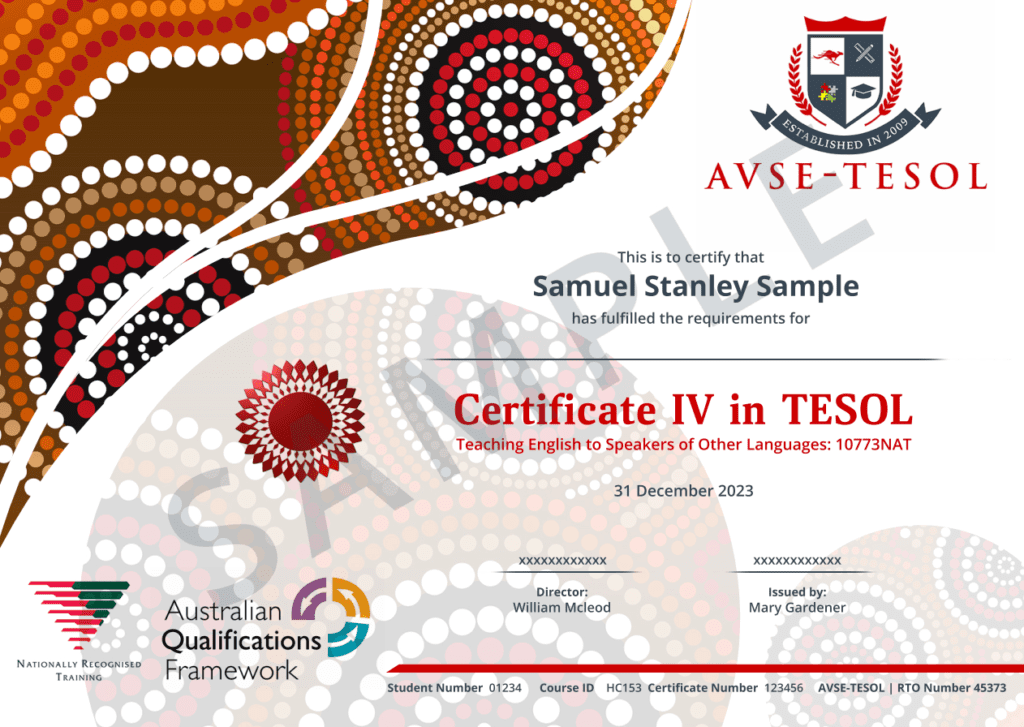
While we don’t hand out gold stars (or gold bars) at the end of the TEFL course in Phnom Penh at AVSE, all being well, you will receive the following Australian Government accredited teaching qualification: Certificate IV in TESOL (Teaching English to Speakers of Other Languages, 10773NAT).

tesol course in phnom penh


The qualification is comprised of these 12 ‘Units of Competency’:


TAEDEL401: Plan, organise and deliver group-based learning

TESCUL401: Develop and apply knowledge of cultural factors affecting TESOL teachers

TESPRN402: Assist learners to improve pronunciation and speech

TESGRM403: Assist learners to learn or improve grammar

TESRES404: Source and develop resources to support learning

TESRED405: Assist learners to develop reading and writing skills

TESSPK406: Assist learners to develop speaking and listening skills

TESASS407: Assess language learning

TESMTH408: Apply a range of TESOL methodologies

TESTST409: Assist learners to prepare for English language tests

TESCAL410: Use Computer Assisted Language Learning to assist learners

TESCHD412: Use creative strategies to assist children to learn English


tefl course in phnom penh


The assessment and certificate issuance process takes up to 10 business days from the date the final assessment tasks are submitted. The offsite, independent assessment process is central to international recognition. The time between completing the TEFL course and receiving your certificate won’t impact on your ability to secure a teaching job at one of AVSE’s partner schools in Cambodia. They understand the protocols associated with a government-regulated programme.


Summary

If doing a quality TEFL course in Phnom Penh is something that has crossed your mind, reach out to the friendly folks at AVSE to talk through your options. AVSE offers a government-regulated ESL teaching qualification that will set you up for a brilliant job teaching English in Cambodia or elsewhere. There’s a lot to learn during the intensive 4-week course, but you’ll get all the support and encouragement that’s needed to successfully complete the study programme. Start your teach abroad journey today!


About the writer: Peter Goudge is the Managing Director (and founder) of Australian Vocational Skills and Education (AVSE) in Cambodia and Vietnam. Check out the AVSE website for more information about TEFL courses at AVSE in Phnom Penh, Hanoi and Ho Chi Minh City: www.avse.edu.vn


Where will you teach after your TEFL course in Phnom Penh?


Your TEFL course in Phnom Penh, Cambodia at AVSE will take four weeks. While the course is unashamedly intensive, you’ll have ample time to turn your mind to other issues, such as the general location where you’d prefer to work as an ESL teacher.


If you’re a ‘city’ person, your choices are essentially threefold, Phnom Penh, Siem Reap and Sihanoukville. If you’d like to teach in a regional or rural location, Takhmao, Battambang or Kampong Thom might meet your needs. Does living and working near a beach appeal to you? If the answer is ‘yes’, Kep and Kampot are worth considering.


tefl course in phnom penh


Settling on a location to begin your ‘teach abroad journey’ has, in my view, three key components. First, research, research, research. Second, rapport with the designated employment person at AVSE in Phnom Penh. Third, flexibility. So, let’s have a closer look at these three components.


Research, research, research

It’s true that the TEFL course in Phnom Penh at AVSE comes with hands-on job support, but this doesn’t prevent you from helping yourself. If you’re anything like me, you’ll want to contribute to a decision-making process that will determine your immediate fate.


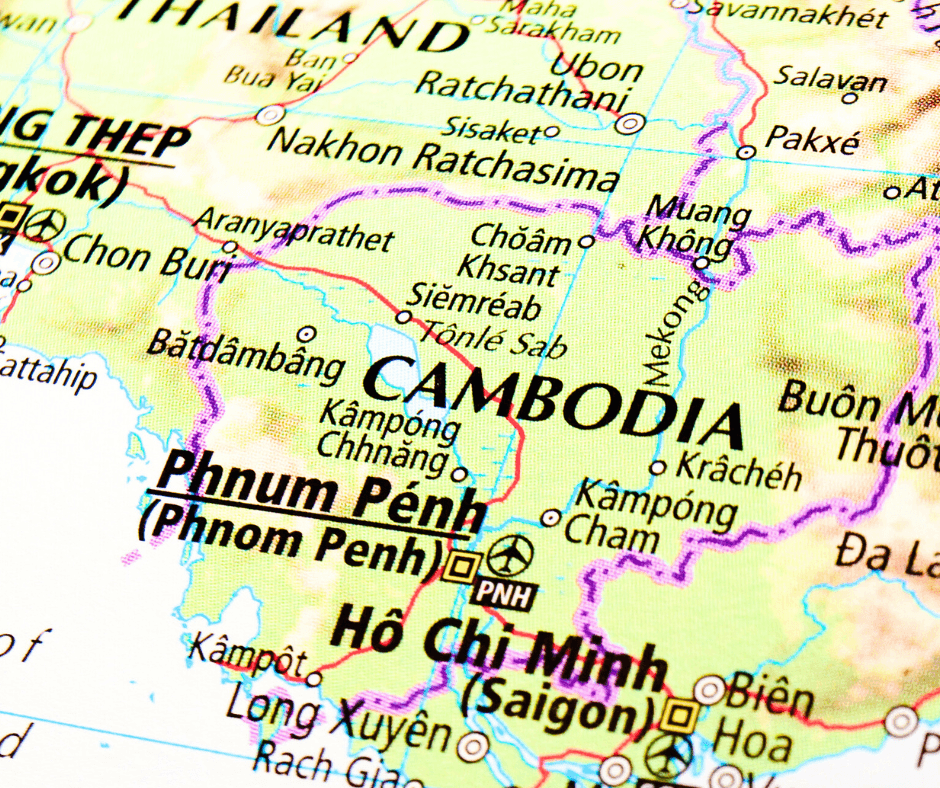
Once you’ve decided if you’re a big city, regional / rural or beach person, find a decent map of Cambodia on the internet or at a book store and start pinpointing possible locations. Gain as much information as you can about each location; Wikipedia is an excellent place to start – and it’s free. Next, narrow your choices down to three possible areas. Finally, search on Google and social media for job opportunities and teacher chatter in the three locations that are of interest to you. If you decide to ‘delist’ one of your three ‘definite possibilities’, add a new one and thoroughly check the place out. I’d encourage you to reach out to prospective employers on your own behalf, but make sure the employment person at AVSE is consulted beforehand. Why? You might be doubling up.


tefl course in phnom penh


Build rapport with AVSE’s employment person

AVSE’s designated employment person in Cambodia is based at the same location where you’ll do your TEFL training. The employment person will know: 1. where there are teaching jobs available at a given time; 2. how to contact AVSE partner schools in particular geographic locations, and 3. about employment conditions in different parts of the country (hours, non-cash benefits and suchlike).


I’d encourage you to build rapport with the AVSE employment person while you’re completing your TEFL course. You can do this by sharing your aspirations (see, ‘Research, research, research’ above), keeping in regular contact, being mindful that he (or she) probably knows the local job market better than you do, turning up for job interviews that have been arranged for you with partner schools, and most importantly, by being flexible.


Your interactions with the employment person at AVSE need to be collaborative. For example, you want a teaching job and the employment person wants you to secure a teaching job. It’s your responsibility to ensure the employment person is kept updated on the work that you’re doing to help yourself find a great teaching job. Likewise, the employment person has a responsibility to ensure that you’re kept updated on work that he (or she) is doing on your behalf.


tesol in phnom penh


Flexibility

Let’s say that you have done all the right things from the day you arrived in Cambodia. You were a superstar in your TEFL course in Phnom Penh and you followed the ‘Research and Rapport’ suggestions above. Despite doing all the right things, there isn’t a teaching job available in your preferred location – or there is, but the conditions don’t meet with your expectations. What should you do? Grizzling is one option. Accepting that ‘it is, what it is’ despite everyone’s best efforts is, in my view, a far better option. Move on to Plan B, in consultation with the employment person at AVSE; this is where the rapport that you spent time building will bear fruit.


Being flexible when you’re looking for a teaching job doesn’t extend to selling your soul. It’s about being realistic, recognising that you’re a new person to the profession and that 90% of vacant teaching jobs at any given time, are in Phnom Penh. Starting a new career path in a foreign country is not a time to have an inflated opinion of where you fit into the picture. If there is a decent job on offer, grab it! Your first teaching job in Cambodia does not have to be your ‘forever’ teaching job. It might be a stepping stone to something better.


Summary

I’ve got no doubt that you’ll be a happy person once you’ve successfully completed the Australian Government accredited TEFL course in Phnom Penh at AVSE. You’ll be an even happier when you lock in your first paid job teaching English in Cambodia. While the friendly staff at AVSE in Phnom Penh will be by your side every step of the way, there are things that you can do ensure the transition from your TEFL course to employment goes smoothly. Do some research on cities and towns that might be a good place to work, build rapport with AVSE’s employment person in Phnom Penh – and be flexible. By following these simple ‘pointers’, you’ve got every reason to believe that you’ll be in a terrific teaching job in Cambodia straight after your TEFL course concludes.


About the writer: Peter Goudge is the Managing Director (and founder) of AVSE in Cambodia and Vietnam. AVSE offers Australian Government accredited TEFL programmes in Phnom Penh, Hanoi and Ho Chi Minh City. Check out the AVSE website: www.avse.edu.vn


TEFL Course in Phnom Penh – it’s your time to shine


AVSE-TESOL offers a brilliant TEFL course in Phnom Penh, Cambodia, for aspiring English language teachers. The course involves a time commitment of 150 hours over four weeks and leans heavily towards practical teaching experience. At the end of the four-week study programme at AVSE in Phnom Penh, participants graduate with TEFL certification that’s Australian Government accredited and internationally recognised, the perfect springboard for teaching jobs in Cambodia.


TEFL Course in Phnom Penh


Over the past decade, more than 5000 trainees have completed AVSE’s Australian Government accredited TEFL course and embarked on a rewarding career path teaching English in Cambodia, Vietnam and elsewhere in the world. Top shelf accreditation, international recognition and more than a decade of training aspiring English language teachers in Southeast Asia help to distinguish the TEFL programme at AVSE in a highly competitive market. Offering everything a TEFL trainee needs in one place to get started on their teaching journey is another distinguishing factor – visa guidance, airport collection, complimentary accommodation during the study programme, a Welcome Party, a free City Tour, hands-on job support, the friendliest staff you will ever meet and the lists goes on and on.


Once you have completed the TEFL course in Phnom Penh at AVSE, you will be equipped with the skills, knowledge and certification you need to land that all-important first job as a paid English language teacher. English teaching jobs in Cambodia are available 12 months of the year. Most foreign English teachers in Cambodia work 25 hours a week and manage to save (after meeting all expenses – rent, food and such like) between US $500.00 and US $750.00 a month, without scrimping. The ability to save serious money and get ahead will be all yours – and you’ll do this while leading an expat lifestyle in an exotic country. It doesn’t get any better! Your expat lifestyle will include, among other things, plenty of leisure time, outings with other ESL teachers, friends and locals – and the opportunity to take in the best of what Cambodia and neighbouring countries have to offer. You might be surprised to learn that it only takes six hours by bus (US $17.00) to travel from Phnom Penh to Ho Chi Minh City in Vietnam. You can pop over to Vietnam for a weekend away.


So, how can you start this new chapter in your life, teaching in Cambodia? Firstly, you need a spirit of adventure. Secondly, you need to make that life-changing decision to become an English language teacher abroad. Thirdly, you need to settle on a date to make the big move. Lastly, you need to complete and submit the plain-English, online enrolment form to join the TEFL course in Phnom Penh. The enrolment form will take less than 10 minutes to complete. Among other things, you’re asked to provide your name, address, contact details, information about how far you got at school, how did you hear about AVSE-TESOL and suchlike. You will find an enrolment form to join the TEFL course in Phnom Penh at AVSE here.


What are the core requirements to join the TEFL course in Phnom Penh at AVSE? There’s no doubt that a university degree (any discipline) will open a few more doors for you as an English language teacher in Cambodia. Don’t be disheartened if you don’t have a degree; it’s not a core requirement for a Work Permit in Cambodia. You need a ‘fun’, ‘can do’ disposition. You also need to be adaptable, keeping in mind that Cambodia is a developing country with a harsh climate – very hot and very wet.


tefl in phnom penh


AVSE staff will reach out to you by email with instructions on what needs to happen next, within three days of receiving your enrolment form to join the TEFL course in Phnom Penh. All being well with your enrolment form, you’ll be on your way to an exciting, new career path teaching English in Cambodia. It’s that simple. What’s my advice? Grab this once in a lifetime opportunity now.


About the writer: Peter Goudge is the Managing Director (and owner) of AVSE-TESOL in Cambodia (Phnom Penh), Vietnam (Hanoi and Ho Chi Minh City)  and Online. Originally from Australia, Peter has lived and worked in Southeast Asia since 2006. Check out the AVSE-TESOL website: www.avse.edu.vn


Teaching English in Cambodia without a degree


Teaching English in Cambodia Without a Degree is 100% legal


Teaching English in Cambodia without a degree is not only possible, it is 100% legal – and there are teaching jobs galore right now. Cambodia is one of only a few countries worldwide that welcomes non-degree holders into the local teaching fraternity. This is good news for people who think they’d make a decent English language teacher, even though they don’t have a degree. It’s equally good news for students across Cambodia because the ‘English teacher pool’ is much larger than it would otherwise be. For the purpose of this blog post, let’s assume that you don’t hold a degree, but you want to teach in Cambodia.


Teaching English in Cambodia without a degree


Despite a university or college degree not being a core requirement to take on a legal teaching job in Cambodia, there are other ‘hoops’ that you’ll need to jump through. The ‘hoops’ are all manageable, but they will require you to: 1. spend a bit of money; 2. do some self-promotion; and 3. possess the ‘patience of a saint’. Like everything else in life, if you want it enough, you’ll weave your way through what needs to be done to achieve the desired outcome. The ‘outcome’ in this instance is something to behold. Among other things, there’s a quintessential expat lifestyle on offer, a decent salary in a country where the cost of living is low, and job satisfaction that few people experience in their lifetime. Importantly, you’ll feel appreciated. Being appreciated does marvels for self-esteem.


Hoop 1: Spend a bit of money

While there’s no issue with teaching English in Cambodia without a degree, reputable schools in Phnom Penh and across the country expect foreign teachers to hold government-regulated, internationally recognised TESOL, TEFL or CELTA certification. In plain English, TESOL, TEFL or CELTA are teaching certificates. This is where you will need to part with a bit of money. Government-regulated TESOL, TEFL or CELTA is serious job training that leads to an English as a Second Language (ESL) teaching qualification that you can use anywhere in the world. The ‘government related’ requirement is the key to legitimacy.


teaching english in cambodia without a degree


The Australian Government accredited TESOL course at AVSE-TESOL in Phnom Penh is perfect. TESOL at AVSE-TESOL involves a time commitment of 150 hours over four weeks. The TESOL programme at AVSE-TESOL is all about ensuring that you have the skills, knowledge, practical experience, and quality certification you need to get a teaching job in Cambodia – and do the job well.  


Hoop 2: Self-promotion

Self-promotion is one of those things in life that people either shy away from or embrace with enthusiasm. There doesn’t seem to be any middle ground. In the context of finding a teaching job in Cambodia, I think you’re better placed if self-promotion doesn’t come easy for you compared to someone who embodies self-promotion. Certainly, your demeanour will be in sync with the local population.  


teaching english in phnom penh without a degree


The ‘self-promotion’ hoop is more about putting yourself, and your quality TESOL certification, in front of prospective employers (schools) in Cambodia than ‘big-noting’ yourself. Yes, teaching English in Cambodia without a degree is perfectly legal, but you will be competing for teaching jobs with people who hold a degree. Putting your best foot forward is paramount.


Here are eight ‘self-promotion’ tips, not in any particular order, that will be well-received by schools in Cambodia – the folks at AVSE-TESOL in Phnom Penh can help you with all of these without charge:


  • Produce and distribute a professional-looking, one-page curriculum vitae (resume). Your curriculum vitae needs to include a carefully worded paragraph about you, a decent head and shoulders photo and information about your government regulated TESOL certification.
  • Make a short introduction video that shows what you have to offer – professionally-minded, culturally sensitive, hold quality TESOL certification and suchlike.


Teaching English in Cambodia without a degree


  • Have hard and soft copies of your key documents readily available – curriculum vitae, notarised teaching certification, sample lesson plan, notarised background check, passport with a current visa, written teaching-related testimonials.
  • Invest in professional-looking clothes and footwear (two sets). Here’s some insight – imagine that you’re going to work in a bank, that’s the standard you need to meet.
  • Be mindful of your personal appearance and hygiene. Nobody expects you to look (or smell) like Tom Cruise or Beyonce, but make the best of what you’ve got.
  • Show that you know a thing or two about cultural sensitivity. Learn how Cambodian people greet each other and follow suit, if you have tattoos, cover them, don’t touch people you don’t know, keep your voice down, speak slowly, be humble, be grateful for the opportunity that has presented itself.   


  • Join local teaching-related Facebook Groups – there are many in Phnom Penh – let people know that you’re in town and looking for an opportunity to start teaching English in Cambodia without a degree.
  • Be ready to produce a ‘half-decent’ lesson plan with minimal notice; a coherent structure is the key.   
 

Hoop 3: Patience of a saint

In the third or fourth century (the exact time is unknown), Cato the Elder wrote: “Of human virtues, patience is most great.” Cato was clearly a ‘man before his time’. He’d do well teaching English in Cambodia without a degree or under any other circumstances. Why? Cato clearly understood the significance of ‘patience’.


teaching english in cambodia without a degree


Frequently, you’ll see and hear things as you go about your daily life in Cambodia as an English teacher and expat that will leave you ‘shaking your head’. From this day onwards, I’d suggest that you make a point of not shaking your head. It won’t change anything. It won’t make you feel better. Shaking your head, grumbling and the like feed alienation. Possessing the inner strength, the ‘patience of a saint’, not to buy into occurrences that peeve you, is pivotal to your longevity as an English teacher in Cambodia. Heaven knows Cambodia is full of things that will leave you frustrated and even ‘red-hot’ angry. Frustrations experienced by expats in Cambodia are magnified by the harsh climate, abject poverty, poor infrastructure, and cultural nuances.  


What’s the key to exhibiting the ‘patience of a saint’ in Cambodia? Simple! Always remember that you’re a visitor. Acknowledge that Cambodia is Cambodia; it’s not Sydney, New York, or London. Whatever Cambodian folks do in their own country makes perfect sense to them. They don’t want or need a random foreigner telling them how to run their school, business, or life.


Summary

This blog post has focused on issues about teaching English in Cambodia without a degree. It’s crystal clear – a university or college degree is not a core requirement to work as an English teacher in Cambodia. You will need quality, government-regulated TESOL certification and the folks at AVSE-TESOL in Phnom can help you with this requirement. Moreover, you will need to engage in some self-promotion – without going over the top – and find the patience you probably didn’t know existed. It’s all manageable. It’s all central to carving out a new career path as an English teacher in Cambodia. What’s my advice? Grab the opportunity with both hands.


About the writer: Peter Goudge is the founder and Managing Director of Australian Vocational Skills and Education (AVSE-TESOL) in Cambodia (Phnom Penh), Vietnam (Hanoi and Ho Chi Minh City) and online. If looking to start a new chapter in your life teaching English in Cambodia, reach out to AVSE-TESOL today: www.avse.edu.vn


TESOL Course in Cambodia

TESOL Course in Cambodia

TESOL course in Cambodia – what to expect


Have you been thinking about doing a TESOL course in Cambodia, but are unsure what to expect and where to do it? In this blog post, I’ll share my view on what to expect and the best place in Cambodia to do your TESOL, based on my personal experience.


What does TESOL mean?

First, let’s start with the basics. ‘TESOL’ is an acronym. It stands for Teaching English to Speakers of Other Languages. People like you and I do a TESOL course to learn how to teach English to students who are not native English speakers. In the TESOL training industry, there are essentially two types of courses: 1. those that are government-regulated and legitimate ESL teaching qualifications that come with worldwide recognition, and 2. diploma mill courses that might look enticing on a website page or in flashy videos but carry no academic weight.


What to expect from a TESOL course

Assuming you go down the legitimate path, refer to point one above; you can expect to acquire the knowledge, skills and government-regulated TESOL certification you need to secure a job teaching English in Cambodia or another country.


TESOL course in cambodia


Your TESOL course in Cambodia will not be a ‘walk in the park’. Just as the provider of your TESOL course has responsibilities and obligations, for instance, delivering on job placement if promised from the outset, you’ll also have responsibilities and obligations. You’ll need to give your TESOL course your ‘best shot’. Professionally going about your business will be a core requirement from day one. Being realistic and adaptable will be expected. The entirety of your TESOL course will be one of those times in your life when you need to listen to the experts who deliver the training.


We’ve canvassed what to expect from the actual TESOL course – skills, knowledge, government-regulated certification and ‘hard yards’ – but what else can you expect given that the study programme doesn’t take place in a vacuum? You’ll be pleased to learn that your TESOL course in Cambodia won’t be ‘all work and no play’!


During your TESOL course, you’ll have ample time to explore Cambodia’s stunning landscapes and meet many amazing people, locals, classmates, and other folks who share your passion for adventure. The cost of living in Cambodia is a fraction of what it is in western countries, so your money will go further. I’m certain you’ll adore the food – think fresh seafood, crispy baguettes, and delectable fruits dripping with sweetness.


TESOL in Cambodia


Cambodia has a rich culture and history. There are plenty of things to see and do – and getting around is cheap and relatively easy. Travelling to Cambodia for any reason, whether to do a TESOL course or otherwise, must include visiting the World Heritage listed Angkor Wat Temple, located a few kilometres outside of Siem Reap. It’s in the same ‘league’ as the Pyramids of Egypt, in my opinion, and I’ve had the good fortune to visit both.   


Where to do your TESOL course

If you agree with the idea that it’s better to do a legitimate, government-regulated TESOL course in Cambodia, as distinct from a ‘diploma-mill’ course, check out the AVSE-TESOL website: www.avse.edu.vn


TESOL course in Cambodia


The TESOL course at AVSE-TESOL is accredited by the Australian Government. It’s equivalent to Cambridge University’s CELTA programme. Skills, knowledge and government-regulated TESOL certification – you will find all three and a lot more at AVSE-TESOL. Here’s a snapshot of what’s included: 150 hours of ESL teacher training over four weeks, 14 hours of practical teaching experience with actual ESL classes in a real school environment, certification under the Australian Qualifications Framework (AQF), 25 nights’ accommodation within walking distance of the training location – and hands-on job support in AVSE-TESOL’s extensive network of partner schools located the length and breadth of Cambodia.  


While the Australian Government accreditation says something about the quality of AVSE’s TESOL course, it’s the practical dimension of the programme and the meaningful job support that people rave above.


What are you waiting for? Start your adventure in Cambodia today and see where it takes you!


Conclusion

At the beginning of this post, I mentioned that I’d share my view on what to expect with your TESOL course in Cambodia – and where to do it. You can expect to acquire the skills, knowledge and certification needed to get a job and be a decent English language teacher, but you’ll need to ‘put your shoulder to the grindstone’. You can also expect time available to take in the best of what Cambodia offers. If you plan to go down the ‘legit’ path with accreditation and the like, I drew on my personal experience and suggested that the AVSE-TESOL programme in Cambodia is worth checking out.


About the blogger: Originally from Little Rock, Arkansas, Meg Innis has spent the past four years teaching English in Cambodia, Vietnam and most recently in South Korea. She’s an intrepid traveller who is always looking for the next teaching destination.


TESOL course in Cambodia – how to check if it’s ‘legit’


If you’re looking to do a TESOL course in Cambodia, no doubt the internet will be your first port of call. By doing a Google search for ‘TESOL course in Cambodia’, ‘TEFL in Phnom Penh‘, ‘teaching jobs in Cambodia‘ or similar, you’ll find page after page of TESOL/TEFL providers who want you to sign on the dotted line – and quickly!


TESOL Course in Phnom Penh


The reality is that not all TESOL courses are the same. There are brilliant TESOL courses, mediocre TESOL courses, dubious TESOL courses and a bunch of downright ‘shockers’. In this blog post, I’ll illuminate three key elements that should be part of your due diligence before you part with your hard-earned money on a TESOL course in Cambodia. First, is the course ‘nationally’ recognised? Second, does the course include a sizable, practical teaching component that: a) offers a mix of teaching experiences; and b) is critically assessed? Third, does the course come with meaningful, ‘hands-on’ job support?


If a TESOL course that has caught your attention fails on any of the three elements that I have identified, I’d suggest that you give it a miss and resume your search. Let’s look at ‘nationally recognised’, ‘practical teaching component’ and meaningful ‘job support’ in more detail.


Nationally recognised

AVSE’s TESOL course in Cambodia, is an excellent example of a study programme that’s nationally recognised (in Australia) and therefore meets a key criterion to be internationally recognised. On the homepage of the AVSE website ( www.avse.edu.vn ), you’ll see:


  • the logo of the Australian Qualifications Framework (AQF), the umbrella entity for nationally recognised training in Australia;
  • the AQF course code for the TESOL programme that AVSE delivers in Cambodia; and
  • information about AVSE’s Registered Training Organisation (RTO) status in Australia (RTO: 45373). Only RTOs in Australia have the authority to deliver nationally recognised study programmes within the Australian Qualifications Framework, onshore or offshore.


Australian Qualifications Framework AQF


Your TESOL course in Cambodia must be nationally recognised in the home country of the TESOL provider. To folks who know about these matters, it makes perfect sense that a course – and related certification – that’s not nationally recognised cannot be internationally recognised. Understandably, most people can’t be bothered with this level of detail. I get it, but I’d remind you that teaching is a profession and paying customers – English language students and their families – have a right to believe that their teacher holds a legitimate, nationally recognised teaching qualification. In a nutshell, if you invest in a TESOL course that’s ‘accredited’ by a self-appointed accrediting entity that supposedly lives in a mailbox in the Bahamas, or similar, there’s a good chance that the certificate you hold will carry the value of the paper and ink that was used in the printing process.


Sadly, around 80% of TESOL courses and related ‘certificates’ worldwide, including face-to-face and online courses, offer bogus qualifications. Bogus in the sense that the certificate isn’t nationally recognised and therefore cannot be internationally recognised, despite what the provider tells you – and how aesthetically pleasing the videos, promotional material and the certificate might be. Watch out for ‘weasel words’ such as ‘our certificate is accepted’. ‘Accepted’ isn’t a synonym for legitimate. 


Apart from reviewing a TESOL provider’s website, how can you tell if the study programme is ‘nationally recognised’? It’s easy – if you know where to look. Every developed country in the world – and the lion’s share of developing countries – has a national qualifications framework and related accreditation authorities mandated by law. In Australia, the principal entity is the Australian Qualifications Framework (AQF). In South Africa, it’s the South African Qualifications Authority (SAQA). In the United States, you’ll find nationally recognised training and related qualifications on the US Department of Education website ( https://www.ed.gov/accreditation ) and on the Council for Higher Education Accreditation website ( https://www.chea.org/ ). In the United Kingdom, it’s a tad more complicated, but when you drill down, it’s four entities – Ofqual, Qualifications Wales, The Council for the Curriculum & Assessment in Northern Ireland and the Scottish Qualifications Authority. Click here and you will see pertinent information about which entities can accredit ‘non-degree’ qualifications in the United Kingdom – including TESOL Certification.


Here’s some homework for you. If you already hold a TESOL certificate, take 5 minutes and check if it’s nationally recognised. If you’re not sure after checking yourself, reach out to AVSE-TESOL and we’ll give you a straight answer supported by documented facts. 


Practical teaching component

Quality TESOL courses include a minimum of 6 hours of critically assessed teaching practice, with exposure to various ages and skill levels. The TESOL course in Cambodia at AVSE-TESOL includes a minimum of 14 hours of practical experience with two distinct components, observation classes and physically teaching ‘real’ classes. The ‘observation’ component requires TESOL trainees to ‘shadow’ an experienced ESL teacher plying their trade for a minimum of six hours. Once the observation classes have been checked off, the TESOL trainee moves to the critically assessed teaching practice classes. TESOL trainees at AVSE-TESOL teach a minimum of two 60-minute classes and three 120-minute classes (8 hours in total), with classes one, two and three being critically assessed. If a TESOL student feels that they’d benefit from additional teaching practice classes to build confidence – or for any other reason – this can easily be arranged with one of AVSE’s partner schools. 


TESOL Course in Phnom Penh


As the words suggest, ‘Practical teaching’ involves experience with ‘real’ students in a ‘real’ classroom environment. The idea is that you put into practice what you’ve learnt during your TESOL course and receive feedback. In a nutshell, under supervision from a qualified teacher, you give this ESL teaching caper your best shot. You hope to ‘swim like an Olympian’ during teaching practice classes, but the reality is that many newbies ‘dog-paddle’ – and others meet the same fate as the Titanic. It doesn’t matter if you’re an Olympian or have things in common with ‘Fido next door’ or Leonardo DiCaprio; teaching practice is about making a genuine effort, accepting that mistakes will happen and showing commitment to doing better next time.


While the direct experience and feedback that teaching practice affords are pivotal to skill development, this phase of a quality TESOL course is also an opportunity to show your skills to a potential employer. Anecdotally, 70% of trainees enrolled in the TESOL course in Cambodia at AVSE, are employed by the school where they did their teaching practice classes.


Job support

There’s ‘job support’ that’s fluff on a website page and there’s meaningful, hands-on job support. Most TESOL providers advertise that their programme comes with job support, but you’d be well-advised to ‘drill down’ on the meaning of the words. What will the TESOL provider do to help you land that all-important first teaching job? Where does the job support process start and finish?


If the job support consists of emailing en masse a CV that you prepared – without local input – you could be excused for feeling that you’ve been short-changed. With this scenario, the provider is doing nothing more than you can do yourself – and you could probably do it quicker. The ‘scatter-gun’ approach is, at best, tokenism.


TESOL course in Phnom Penh


Meaningful job support is a strategic and multi-faceted process that requires input from folks who know the local market. Job support from your TESOL provider, at a minimum, must include assistance with:


  • Preparing a CV that reflects local requirements;
  • Producing a short video that will allow prospective employers to see and hear from you;
  • Critically assessed mock interviews with typical questions;
  • Background information on the local job market – hours, salary, holidays, professional development opportunities; and
  • Direct referrals to a specific person at a school within the TESOL provider’s network. 


Here’s one other point for consideration under ‘Job support’. If the course that you’ve enrolled in is not ‘nationally accredited’ – and therefore not internationally recognised – all the job support ‘under the sun’ won’t make up for the fact that you hold a qualification that doesn’t stack up and have dud certification, akin to what you’d buy from a ‘diploma mill.


Holding a ‘TESOL certificate’ that literally carries the value of a single sheet of paper, doesn’t mean that you won’t get a job. As they say, “you can fool some of the people some of the time, but not all of the people all of the time”. There are enough folks out there issuing Work Permits (Public Servants) and shonky employers (schools) that don’t care about legitimate certification, don’t know what’s legitimate and what’s not – and in some cases – don’t care and don’t know.


Doing a legitimate TESOL course in the first place will substantially reduce the likelihood that you’ll be knocking on the door of less reputable schools when the time comes to nail that all-important, first teaching job.


Conclusion

Forming a view on whether your preferred TESOL course in Cambodia is legitimate or just another ‘Diploma Mill’ charging a premium for a certificate that carries zero value, involves a bit of research. Before you sign up for a TESOL course in Cambodia, make sure: 1. It’s nationally accredited – and therefore likely to come with international recognition; 2. the course includes a sizable teaching practice component that provides exposure to different ages and skill levels and 3. you’ll receive meaningful job support once you’ve completed the programme. If you make a point of doing thorough due diligence on these three elements, you’ll be well-placed to hit the ground running as an ESL teacher in Cambodia or elsewhere in the world. Good luck!


About the writer: Peter Goudge is the Managing Director and owner of AVSE-TESOL in Hanoi, Ho Chi Minh City, Phnom Penh and Online. Peter has been living and working in Southeast Asia for the past 15 years. If you’d like to know more about teaching jobs in Cambodia (or Vietnam), check out the AVSE website: www.avse.edu.vn


Doing a TESOL Course in Cambodia comes with challenges


If you’re looking to be challenged, the Australian Government-accredited, in-class TESOL course at AVSE-TESOL in Cambodia (Phnom Penh) will ‘suit you to a T’. The coursework will challenge you; there’s a lot to get through in under four weeks. The local environment will also challenge you. Cambodia can be hard work. It’s really hot and dirty, and you’ll have abject poverty in your face. As an ESL teacher, there’s also ‘wall to wall’ kids. Collectively, the challenges that come with doing a TESOL course in Cambodia and carving out a teaching career might seem like a good reason to avoid the place. However, I’d argue that the challenges Cambodia presents for ESL teachers are why you should go there. If you wanted ‘same same’, presumably, you’d stay home.


Personally, it’s the ‘wall to wall’ kids that I found to be the most challenging during my first few months in Cambodia. I went to Cambodia naively thinking I’d teach adults. However, it quickly became apparent that 90% of the ESL teaching opportunities in Phnom Penh and elsewhere in Cambodia involve young learners, 4 to 17 years of age. While it all worked out fine for me, my TESOL course in Cambodia at AVSE-TESOL was excellent, and I grew to love teaching kids, I wanted to share my thoughts and a few kid-related tips for newcomers.   


TESOL course in Cambodia


Your exposure to Cambodian kids will go well beyond your work as an English language teacher, where you’ll be pulled, pushed, pinched, whacked, jumped on and the like. Cambodia is a developing country where abject poverty is on display for everyone to see. Poverty leads to kids (and adults) living on the street, begging for money and engaging in petty crime. Kids in the classroom, kids in the streets and laneways, kids down by the riverside in Phnom Penh, kids working in jobs that an adult would ordinarily do – no big deal, right? It is a big deal if you naturally shy away from kids. It can be an even bigger deal if you naturally gravitate towards kids and people get the wrong idea.


Here are some kid-related tips given to me by a fellow Brit who’d been teaching in Cambodia for six or so years when I first met him shortly after I arrived in Cambodia. The tips held me in good stead throughout my TESOL course in Cambodia and during my 12-month teaching stint.  

Kids in the classroom

As much as humanly possible, keep kids seated throughout a lesson. When they start wandering around in a classroom, disturbing you and their classmates, trouble inevitably happens. During my TESOL course in Cambodia, I was given a range of proactive and reactive strategies to reduce the likelihood of kids wandering around. Make sure your lesson plan contains a mix of short, sharp learning activities, have plenty of backup activities, so the students are always occupied, set class rules from the outset and clue up on non-verbal cues to manage your class. Most importantly, don’t touch a student anywhere or at any time and don’t pick them up like you would with your child. Why? First, they’re not your child. Second, you are leaving yourself open for unfounded accusations. If you’re reviewing work, do it from the side rather than the back. If a student wants to give you a high-five or similar, make it an imaginary high-five.  


Avoid giving free English lessons to kids

After you’ve completed your TESOL course in Cambodia, all being well, you’ll be working as a professional ESL teacher at a school within days; such is the demand. Whether you’re working in Phnom Penh or elsewhere in Cambodia, you’ll hold an esteemed position in the local community. In part due to the respect you’ll command, there will be all kinds of invitations to help local kids with their English outside of a regular school environment, often voluntarily. As a kind-hearted soul, your first inclination may be to ‘help out’. Unfortunately, from my observations, this kind of situation nearly always ends up in tears due to unrealistic expectations, changing circumstances and lack of professional distance – right through to dealing with false accusations and legal problems. It’s simply not worth the grief. If you feel the need to help local people outside of the classroom environment, best to donate to a reputable charity and leave it at that. Avoid giving free English classes.


Kids are not a tourist attraction

You might be surprised to learn that there are travel companies in Phnom Penh organising tours for westerners to visit poor families, orphanages and the like. While I am sure tours of this kind are a source of much-needed funds – and most of the participants are well-meaning, it’s a bizarre practice and a good example of ‘Only in Cambodia’. Exhibiting kids like we exhibit animals in a zoo is demeaning and probably violates fundamental human rights. Most people in a developed country, parents in the UK, for example, would be appalled if their child’s kindergarten group was ‘displayed’ or required to sing a cute song for a busload of foreign tourists. Give this kind of activity a miss.


TESOL Cambodia


Don’t give money to kids

If you give money to a student, he (or she) will tell their parents, school friends and others. Through a simple Google search, you’ll see that Cambodia has a sad history of attracting foreigners with their own agenda, who were happy to give money to kids. Being tarred with the same ‘deviant’ brush will, at a minimum, end your teaching career, and you’ll have your face on the front page of newspapers far and wide – even if your intentions were noble.


Like most English language teachers, you’re almost certainly a kind-hearted soul by nature. Imagine you’re on a day off from your TESOL course in Cambodia, and checking out a tourist site. There’s a scruffy-looking kid who asks you for $1.00. Will you give the kid some money? By handing over money when confronted with this kind of scenario, you’re essentially encouraging the child to continue begging. ‘Working’ as a beggar doesn’t leave much time for schooling, markedly increasing the likelihood of a lifetime of vulnerability and poverty. Don’t give money to Cambodian kids under any circumstances.


Professionals are the experts

Once you have completed your TESOL in Cambodia, you can rightly say you know a thing or two about teaching English as a second language, and have a certificate that says as much. However, TESOL Certification doesn’t qualify you to rescue children you believe are vulnerable any more than it permits you to work as a dentist, a medical practitioner and the like. It is irresponsible and dangerous to rescue a child in a foreign country. Instead, let the professionals with the skills and local knowledge help the child. If you encounter a situation where you believe a child is in danger, make immediate contact with a government (or non-government) child protection agency or reach out to the local police. You’re not making a fuss or bothering anyone by passing information to those qualified to deal with children at risk. On the contrary, you’re taking appropriate action to ensure a child is safe.


Summary

Doing a TESOL course in Cambodia and working as a professional English teacher in Phnom Penh or another city comes with many challenges. My greatest challenge was learning how to interact with local kids in the classroom and elsewhere. I picked up a few tips that I wanted to share with others thinking about heading to Cambodia to work as an ESL teacher. Don’t – touch local kids, hand out money, offer free lessons, participate in silly ‘kid-related’ tourist activities or take the law into your own hands trying to ‘save’ a kid. Constantly remind yourself that you are a visitor and go about your business as expected from a visitor to your own home.  


About the writer: Paul Douglas did his TESOL course in Cambodia at AVSE-TESOL in late 2018. He worked as an ESL teacher in Phnom Penh until February 2020. Paul is currently working in a few different jobs in Portsmouth, in the south of the United Kingdom, saving money for his next teaching abroad adventure.